Sunday, 1 March 2020

1st Sunday in Lent 2020

So we find ourselves once more at the beginning of Lent. I’m going to be completely honest- I love Lent. It’s probably my favourite part of the liturgical year. Maybe because I like routine and orderliness. I love structure and Lent gives us structure – a structured way to enter into the wilderness (like Jesus in the gospel reading), which is anything but orderly; yet Lent gives us a way of entering the wilderness with Jesus and a way to confront what we find there.

We start on Ash Wednesday with a service that moves us to ask ourselves “who am I?” by exploring our choices, the things we’ve done and thought and said, and examining which of those choices didn’t come from a place of Godly love. We also confront our inevitable death, and if we’re going to die how then do we want to live? Who are we and what are the things which have the capacity to draw us away from God?

We have readings this morning all about temptation, and a reminder of the things which do have the capacity to draw our eye from God and move us out of or away from our relationship with God.

There’s been a shift in our language in that we often talk about sins, plural; individual activities or acts which are bad or wrong and by these actions we ourselves become sinful or have committed a sin. Jesus (and Paul) most usually talks about sin, singular, no s on the end, which Sarah Heaner Lancaster defines as anything which takes us out of relationship with God.

This much broader understanding I feel is perhaps a more helpful thing to take into the wilderness with us during Lent. 

I said on Wednesday in that solemn Ash Wednesday service of remembering that one of the things we remember and apologise for are the times we forgot we aren’t alone, because they're the times, when we forget that God is with us - the very meaning of the word Emmanuel – that’s when we fall out of relationship with God, and make the choices that don’t mirror God’s love that is very much within us.

So maybe a question to ask ourselves at the beginning of our wilderness journey this Lent is what are our temptations? And by that I mean the things which run the risk of taking us out of our relationship with God. Lent gives us a safe space to give space and time for these questions and explorations, knowing that like Jesus it’s the Spirit who leads us and sustains us in the wilderness. As we work towards Easter Day we can use Lent as a safe space to explore who we are and how we want to live our lives, hopefully in a way which mirrors Gods love to those around us.

Based upon Genesis 2.15-17; 3.1-7Romans 5.12-19 & Matthew 4.1-11

Wednesday, 26 February 2020

Ash Wednesday 2020

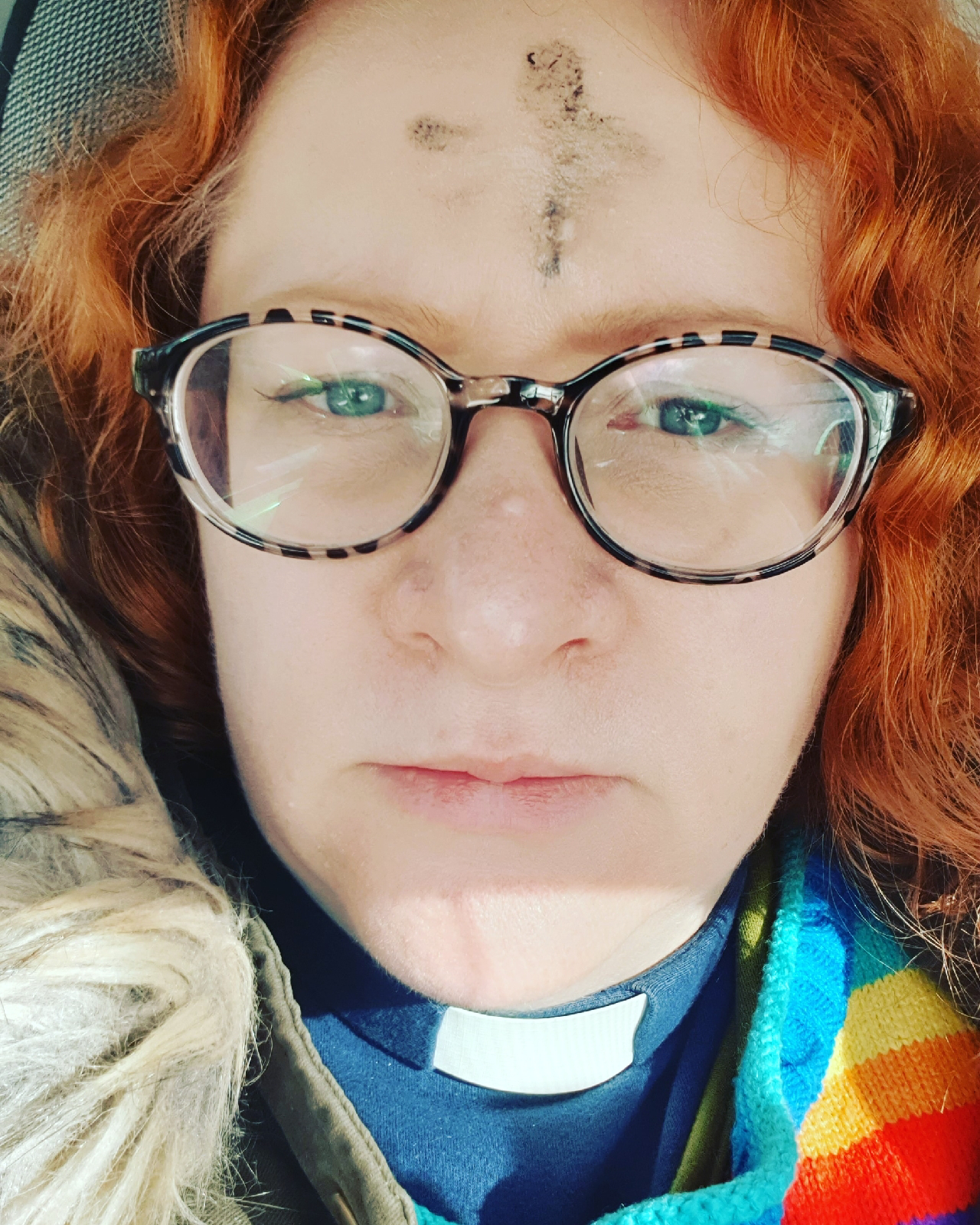
I wrote this for this morning's school service where 90 children came to St Michael's to share in a pared down Ash Wednesday service with ashing. 

I decided to read it again at our main service this evening; we're told to come with the faith of a child and sometimes we need to hear something very simply put.

Ash Wednesday isn’t about thinking of the things we’ve done wrong so we can be reminded that we’re bad people; it’s remembering that God created us from goodness for goodness.

And we get to ask the question why; why, when we’re created good do we sometimes not act kindly, or why do we create space in the world for unkindness to happen?

Today isn’t about thinking that one day we’ll die so that we can be sad; Knowing we will die should help us to see how we should live now.

But we don’t remember our choices and our deaths on our own; we use this day to remember together, as a community, because we don’t live our lives alone, we live our lives together.

And today we apologise together for all those times we chose something that wasn’t loving, that wasn’t kind, and for when we forgot that we aren’t alone; when we forgot that not only do we belong to each other but to God.

Today we recognise together our good and bad choices. We recognise that like God’s wonderful creations the plants and trees we’re capable of amazing beauty if we choose to live lives based in love. Like holy soil nurturing the things which grow in it, we grow in love.

Lent begins today. 40 days and 40 nights to take us up until Easter. 40 days and 40 nights where we think about the best way to live in the world, the best way to use our wonderful gift of a life. 

Let’s just take a moment, a tiny snapshot of time, to stop, to remember and to think of our amazing capacity to love  and to live kind, beautiful, flourishing lives, lives which mirror the love God has for us.


Sunday, 16 February 2020

Don't Worry...Take Action

I’m absolutely certain that at some point each one of us would have felt worried. That proper worry that feels like butterflies in your stomach and around your heart. Worry that feels like your blood in shivering in your veins. Worry that invades your every waking thought and stops you escaping it by preventing you from sleeping. Waiting for results of a medical test or exam result, money worries or waiting to hear about redundancy, switching on or reading about the news of political unrest, dangerous viruses or the climate crisis.

Worry it seems is simply part of our lives, we probably experience it every day to a greater or lesser extent. As we have more knowledge of the world around us we seem to be finding more and more things to worry us. 

And how many times does someone see or hear our concerns and say “don’t worry!” Does that ever actually stop us worrying? If those comforting us are Christians they may even remind us of today’s gospel passage. Oh to be one of those cheery or relaxed souls who seems to drift through life without a care, taking life a day at a time. Never stressed or anxious, never overwhelmed. How I would love to be that person.

I wonder if that’s how God created us to be? We hear the creation narrative once more today- order out of chaos, God willing something and it being so…and it being good! Finally God creates humankind and our existence not only makes things good but very good. In the wonder of creation that God is willing into existence humankind arrives and enhances things- our presence makes something wonderful even better. 

Everything is good and everything is blessed. And we begin our role as the stewards, the guardians of all the good things God has created. Only to us did God give not just the responsibility but the ability to care for the whole of creation. 

Yet by the time the Letter to the Romans is being written we can see how much our relationship with the world around us has deteriorated. Creation is groaning and even though labour pains are a sign of something coming to fruition, something about to be born, the process itself can cause a lot of distress. 

This area, where we live, has until very recently been semi-rural. It was amazing for me to grow up in a farming family. We had that relationship to the land, to the seasons and to animals. It never felt exploitative but reciprocal and respectful, as small-scale farming is. I feel that I gained so much from being around the farming community, an understanding of the world and the stewardship role intended for us.

It’s something I think many of us yearn for now with our disconnect from the food we eat, as due to necessity, availability and simply how our lives work we mostly eat and buy food we have no relationship to, no understanding of how and who produced it.

Yet we know that something is amiss in our relationship with creation. Even though it’s incredibly difficult to recognise individual responsibility in it, and often we campaign and work against it, but we see the exploitation of the earth by industry, 
there’s no chance for the world to renew itself as demand and financial markets mean more and more questionable methods are used to obtain and process natural resources, to create artificial resources, to grow more foods, and to farm and process more animals.

We weren’t created to use our power this way. And it’s all incredibly worrying.  The kind of worry that wakes us up at 2am and creates knots in our stomach. But then we read today’s gospel where we have Jesus saying “don’t worry” like that super-chilled-out friend who nothing seems to phase.

Thankfully he’s not just saying “don’t worry” but also giving a pretty good reason why. Because God is in charge, because God loves us, and because this isn’t what God created us for. Jesus is reminding us that worrying isn’t going to make things any better, but this isn’t just a call for us to chillax, take a chill pill or just calm down, it’s an indicator of how we should spend our time and energy instead of worrying. 

But strive first for the kingdom of God and his righteousness, and all these things will be given to you as well.

I think that our responsibility as Christians is to discern how we can regain or renew our relationship to creation. At a time where some of the organisations seeking to raise awareness of climate issues are on the same government watchlists as terrorist organisations our church has become an important voice in encouraging us to examine this relationship. 

This week the General synod ripped up its original target for the Church of England becoming carbon neutral by 2045 and set a target of 2030. Manchester is committed to the entire diocese fulfilling the “eco church” criteria and we’re committed to that here at St Michael’s. The Archbishop’s Lent book this year is Ruth Valeo’s Saying Yes to Life, a book which addresses these concerns, and Love Life Live Lent has a new version with an emphasis on caring for creation. This relationship with creation is front and centre amongst the concerns of our church.

I don’t know about you but I don’t find this very easy at all- changes aren’t easy, and there’s still so much I need to do, changes to make to my every day life, and sometimes it feels incredibly pointless when I see the lack of work being done elsewhere, or even how difficult it is to stand by these principals working in a hospital environment.

But Christianity has a strong history of individuals living differently, living in a way we feel is in-line with that striving for the kingdom, in a hope that us as individuals may become a group, and that group becomes a community, and as more individuals, groups and communities form they may all strive to bring about that renewed relationship with creation.

As it groans with labour pains we still don’t know what the fruits of that labour will be, but I hope with all my heart that the results of our own worry, striving and labour will be to regain our role as the protectors of creation, that once again humankind’s presence in the world can make it not just good but very good.


Preached 16.2.20 at the main Sunday service, based upon Genesis 1.1-23Romans 8.18-25Matthew 6.25-end 

Friday, 14 February 2020

Shine on

I don’t know if you’ve been to a baptism service recently, it’s one of my absolutely favourite things to do. Right at the end of the service we give the family a candle, lit from our Easter candle, and we say these words:

God has delivered us from the dominion of darkness
and has given us a place with the saints in light.
You have received the light of Christ;
walk in this light all the days of your life.
Shine as a light in the world
to the glory of God the Father.

The idea of Jesus being the light of the world, represented by the Easter candle, is a central theme of the baptism liturgy, but then right before we send the newly baptised back out into the world we’re telling them that they carry the light of Christ with them. They too are the light.

We hear this from Jesus himself see in today’s gospel reading (Matthew 5.13-20) where Jesus tells those listening that they’re both salt and light.

My understanding of what it means for us to be salt is salts ability to enhance things. It brings out flavour and preserves, in the bible we see it used to seal covenants or sprinkled on sacrifices. Jesus's followers are to enhance God's world.

Then, as is the baptism service, Jesus tells his listeners that they, not he, are the light of the world.  We’re not mere witnesses to the light, as is John’s gospel, not just the recipients of the light but it’s bearers. It’s our purpose to shine wherever we find ourselves; to shine with the love which Jesus has commanded us to share in his name. 

This sounds like a mammoth task, one we don’t necessarily feel worthy of, we know our own imperfections and the darkness in our own hearts. I read a wonderful quote this week; 
Once you’ve been in the dark you learn to appreciate everything that shines. 
And it only takes a tiny amount of light to be seen in the darkness.

You may be thinking that you can’t be the light because of how much you need that light yourself. The people Jesus was preaching to here felt that way too; they were imperfect people, drawn to the light of God reflected and perfected in Jesus.

There’s a famous Leonard Cohen lyric, often quoted since his death; ring the bells that still can ring, forget your perfect offering. There’s a crack in everything.  That’s how the light gets in.

Through our wounds and cracks and brokenness Christs light comes to us and shines into our darkness, through our darkness and out into the world; it becomes part of us so we can’t help but carry it with us, to wherever we find ourselves. We have received the light of Christ; and we walk in this light each day of our life. And we Shine as a light in the world to the glory of God the, Father.


Sunday, 26 January 2020

Endings and beginnings

Short homily based upon Matthew 4.12-23

We have this morning a gospel of endings and beginnings. We hear that John the Baptist has been arrested, ending his ministry of preparing the way for Jesus’ arrival. On hearing the new Jesus heads north and begins the most active phase of his ministry, using the same words we’ve heard from John; “Repent, for the Kingdom of heaven has come near”. 

From John they we were words of preparation but when said by Jesus they’re words of fulfilment, he is the Kingdom. Matthew loves a bit a fulfilment in his writings, it’s believed he was a Jewish writer, writing for Jewish people. He has lots of references to Hebrew scriptures and we see that this morning as Jesus’ actions mirror Isaiah’s prophecy.

We see new beginnings for other familiar people too in the gospel as Simon-Peter, Andrew, James and John are all called by Jesus to stop casting their nets for fish and begin fishing for people, later Jesus shows us what he means by this as he and his new recruits teach, preach and heal.

It might seem to begin with that Jesus is forming a homogenous group of similar folk, but we see later in the gospel that his central twelve are quite a mixed bunch, both in background and personality. Matthew himself, if we believe the gospel writer and apostle are the same person, was a bit of an outcast due to his profession as a tax-collector but we have to assume he had some degree of education, which our fishermen probably didn’t. 

So why this bunch? Why this odd mix of men? First and foremost they were the ones who said “yes”. Who knows who else Jesus propositioned who never made it into the book because they turned him down? But also I believe that Jesus not only saw who these men were but what they could become, how they could be formed through teaching, preaching and healing and how they themselves could lead and form others.

But this isn’t just the story of them beginning their new life with Jesus, it’s the story of the ending of their old life and that’s not without cost. They’re leaving behind families and jobs, how did Peter’s Mother in Law, whom he lived with, feel about him running out on the family? What about Zebedee? What did his sons’ choice mean for his business?

Rev Rosalind Brown who sometimes writes for the Church Times wrote about her sadness at leaving her family to pursue her calling in the US; "Why can't there be beginnings without endings?"

But this is the cyclical nature of our lives, of our world and indeed our God. It’s death and resurrection. There has to be an ending for the next thing, the greater thing to begin. Sometimes we may be too scared of letting something end so that a new thing can begin, we end up maintaining the status quo at the expense of what could be something amazing, made inert by our fear.

And yet change inevitable, in our lives and in our church, who knows what amazing things may lie ahead for each of us if we have the courage to leave behind the familiar and comfortable to face the new and unknown.


Sunday, 12 January 2020

New Year New Hope?

This morning's sermon based upon Isaiah 42.1-9, Acts 10.34-43Matthew 3.13-end

I was in our living room with Faith on Tuesday night whilst she was doing homework and every now and then she’d chuck a question at me: what’s a justification for war? What are the teachings of war? What’s a fact about weapons of mass destruction? Turns our she was doing her RE homework! And this was homework set before Christmas, before the escalation of the events we’ve seen between the political powers of the US and Iran.

The next morning on the way to school she said “Generation Z are alleviating their anxieties over a potential world war 3 by sharing memes” If you don’t know what a meme is it’s a funny picture, or video clip, usually with some text over it that gets shared on the internet, to much hilarity. One of the ones I’ve seen was a picture of Kermit the frog, sipping a cup of tea- bear with me- looking pensive, and the text reads “We’re 3 days into 2020 and World War 3 is trending…maybe 2019 wasn’t so bad after all”.

There were so many people who by the end of last year had clearly had enough of political turmoil, negativity and endless Brexit chat, alongside an increased awareness of environmental issues, the rise of the far right in various countries…they were so done, and so ready for 2019 to be over. Ready for a new year.

Christmas is that bright, sparkling bit of light in the darkness at the end of the year, then it’s followed by the hope and freshness of the new year, the endless possibilities, the chance to renew, to refresh and to start again, it’s a clean slate. 

Today’s gospel is all about the beginning of something. This is where we recognise Jesus beginning his ministry, and it’s all incredibly symbolic. I don’t believe for a minute that Jesus needed to be baptised, or that he wasn’t already filled with the Holy Spirit, but as Jesus says to John The Baptist’s questioning: “it is proper for us in this way to fulfil all righteousness.” It feels like a very definite way of marking the beginning of what will be the most significant part of Jesus’ life, just as baptism marks the beginning of something significant for each of us and for every child or adult who still comes here to be baptised each month.

And it feels right that the place where we remember this is at the start of the new calendar year, this is the day our Methodist friends say their covenant prayer each year, restating their commitment to following Jesus. It’s not the churches new year as that’s Advent Sunday, but moving from Jesus’ birth, to the feast of epiphany and then having this leap to his baptism does feel right, and biblically there isn’t a lot else to fill the gap! 

It’s a reminder of own baptism, of our confirmation for those who’re confirmed, of ordination vows for some of us. It’s a reminder that at the start of this year we’re continuing on a particular path, following in the footsteps and teachings of Jesus and trying to live as his people.
And yet those feelings of hope and renewal can soon fall away when we wake up to the reality of global events, of the unrest that causes and what the consequences of it might be. 

Generation z are using humour as a coping mechanism but they’re also deeply concerned of what this could mean. It’s a reminder that one of our obligations as Christ-followers is to not be afraid to speak truth to power. I saw many a wristband back in the 90’s with the initials WWJD- What would Jesus do? And whilst the phrase is considered a bit corny now and probably so overused it’s lost it’s power, but it’s often the question we should be applying to situations if we’re to live as people of faith. 

Our other readings this morning offer such wisdom, enlightening us not only to the character of God but God’s love and care for every person on earth. In a world so caught up with the idea of nations, where we see the outcomes of toxic levels of patriotism and jingoism leading to the “othering” of entire peoples and religions, and seemingly creating a space which has given far-right ideology a place to grow, we need to see there’s an alternative.

Peter, in our new testament reading has absolutely had his mind blown. I love Peter, I love him because he’s often a bit of a pratt, he’s always getting things wrong and I find that incredibly relatable. Turns out this bit of plastic doesn’t stop me from sometimes doing or saying the wrong thing and I shouldn’t expect it to because Peter has lived with Jesus, been dramatically baptised in the spirit on the day of Pentecost but still, in his post-gospel life, isn’t perfect.

He’s had his mind blown because he’s witnessed the spirit falling upon the bunch of Romans he’s currently talking to- a bunch of Gentiles, and it moves him to what would have been a seismic shift in his belief: “I truly understand that God shows no partiality, but in every nation anyone who fears him and does what is right is acceptable to him”. 

He then reminds us of how Jesus after being “anointed…with the Holy Spirit and with power” conducted himself, how he used his power; doing good and healing all who were oppressed. If you think how we now perceive power, how power is used by those in possession of it this is just staggering. Peter further reminds us that after Jesus rose from the dead, in that ultimate act of love and display of God’s power, what did he do? He hung out with his friends eating and drinking, consolidating what he’d taught them and encouraging them to teach it to others.

Imagine a world leader using power to educate, to heal and to feed people? They do exist of course but it’s certainly not part of the dominant narrative we see in our daily news.

If we go back to the Isaiah reading there’s lots of differing views on who this text is referring to, we as Christians believe it means Jesus. Whatever the prophet’s intention, it does mean God’s chosen person, the one meant to unite all peoples, the Light to the Nations. The prophet tells us this is the chosen one, God delights in them, God’s spirit is upon them. 

And how will this favour and chosenness be used? They have no need to shout and bluster, they won’t destroy things which are already broken or diminished but will be relentless in their pursuit of justice, and justice not just for one nation but throughout the world, and for people to live in a just world will give them life.
I’m going to re-read the next section of the text because it’s just so beautiful and inspiring and uplifting.

I am the Lord, I have called you in righteousness,
   I have taken you by the hand and kept you;
I have given you as a covenant to the people,
   a light to the nations,
   to open the eyes that are blind,
to bring out the prisoners from the dungeon,
   from the prison those who sit in darkness.

I am the Lord, that is my name;
   my glory I give to no other,
   nor my praise to idols.
See, the former things have come to pass,
   and new things I now declare;

That’s good bible isn’t it?! We believe Jesus is the fulfilment of this, his choice was made at the moment of his baptism, but the continuation of its fulfilment is through us. Jesus taught his disciples to continue his teachings, they took that message to other nations which brought it eventually to us. 

In such an uncertain world, as we begin this new year and we’re reminded of our baptism or confirmation vows, we have to be the light and the ones who thirst for justice, we can be the ones who remind those searching for hope, those desperate to see that there is another way, that hope does exist, and that hope is Jesus.


Sunday, 5 January 2020

Epiphany- you are enough.

Epiphany is that final chapter in the nativity story and yet it passes us by so quickly. For many of us (and those who we've encountered so far in this new year) I’m sure Christmas is done and dusted, but I enjoy that we get to sit with it for a little longer.

I’m sure all the signs of Christmas will soon be removed from our houses, just as they’ll soon be removed from the church- the tree taken down and the stable put away until Advent. I always think everywhere looks a little bare, or maybe a better word is uncluttered, after the Christmas paraphernalia has been taken down. I find that an uncluttered space means I can actually think more clearly, but I do miss this sparkle and especially the lights. There really is something about Christmas lights- reminding us of the light that shines even in the darkest places but also of that guiding light the Magi, now completing their journey, have followed.

There’s always a lot of talk of gifts in epiphany sermons, quite naturally, and an encouragement to think about our own gifts and what we would bring to the stable, to make our own offering before Jesus.

I think it’s really important to remember that it’s just enough that we bring ourselves, it’s great when people have awesome gifts to bring to ministry or this communal life we share, whether it’s the gifts of listening, hospitality, organisation (wish I had that one!) or maybe leadership- however people contribute to our shared life of faith.

But it’s also ok that we’re just here, offering ourselves, even if we don’t think that means much to the God who created everything from nothing. It means everything. 

As we start this new year and are tempted to make plans, resolutions or self-improvements of whatever kind I just wanted us to remember that we are enough, just as we are. Jesus’ birth subverts everything we think we know about power and worth, even the Magi don’t get it at first and they go searching for him in the palace, the seat of human power, but when they eventually find the promised child in a grubby outhouse they realise that this is something different entirely.

You know I like to share bits and bobs with you that I read or find so this is “A Sonnet for Epiphany” by Malcolm Guite, priest and poet:

It might have been just someone else’s story,
Some chosen people get a special king.
We leave them to their own peculiar glory,
We don’t belong, it doesn’t mean a thing.
But when these three arrive they bring us with them,
Gentiles like us, their wisdom might be ours;
A steady step that finds an inner rhythm,
A  pilgrim’s eye that sees beyond the stars.
They did not know his name but still they sought him,
They came from otherwhere but still they found;
In temples they found those who sold and bought him,
But in the filthy stable, hallowed ground.
Their courage gives our questing hearts a voice
To seek, to find, to worship, to rejoice.