Sunday, 11 May 2025

Listen, hear and follow

May I speak in the name of the One God who is Speaker, Word & Breath. Amen. 

Have you ever considered what name you’d choose if were selected to be Pope? I have, in the unlikely event that it might happen, and just because it’s fun. I’d be Pope Julian after Julian of Norwich, which is a delightful coincidence as it was Mother Julian’s feast day on Thursday when Pope Leo was selected.

Did you enjoy Pope-Watch? I’m not going to lie, I loved it – the drama, the ritual and the history of it all, but the hope was beautiful as well- the hopeful expectations of millions of people. 

Mother Julian’s words were in my head as I thought about what kind of man might be appointed to be the world’s most visible Christian. “All shall be well and all shall be well, and all manner of thing shall be well” I told myself as I waited for the announcement, trusting that the conclave were trusting in the Holy Spirit to guide them.

I was a huge admirer of Pope Francis, and my hope was that the person selected will continue his work. I think, from what I’ve read, that Pope Leo will continue in the spirit of Pope Francis, bringing Jesus’ teaching back to the heart of such a public ministry, focusing on people, on love, on social justice and inclusion. Previously he’s called out power imbalances and misuse or misrepresentation of Jesus’ teaching. It Feels rather Jesus-like I think.

Today is Good Shepherd Sunday, our readings are filled with pastoral imagery of God, of Jesus and of ourselves as the flock. As a minister we too believe we have a shepherding role to play, and I’m sure Pope Leo is feeling the weight of this as he leads the Sunday Mass today.

You may have seen the wonderful Series “The Chosen”, which tells the story of Jesus’ life and ministry from leaving the wilderness up until, at the end of the 4th series, entering Jerusalem in triumph. The 5th series is released next month and focuses on Holy Week. I can’t recommend it enough; it brings the gospels to life in a way nothing else I’ve seen or read has.

During the 4th series we see the scene from today’s gospel taking place on the temple steps, and it results in Jesus and the disciples being the victims of an attempted stoning by the Pharisees who are calling Jesus out, appalled at what they call blasphemy. James is quite badly injured and they’re forced to retreat to their lodging house. And they’re scared.

After this, the reality of how dangerous their ministry and mission is hits them, that whilst they all believe that Jesus is the Messiah, and that that is wonderful, not everyone will believe, not everyone will hear and understand, and some may even be threatened to the point where they want to kill those bringing the message.

It’s a moment of hate and violence as a response to a message of love, and I think that’s still the way some people respond when confronted with the true message of Jesus’ teaching, where the poor, the orphaned, the widowed, the sick, the tax collectors, people with questionable pasts and those cast out through illness are all equally loved and held up in God’s eyes, and to do God’s work is to care for the sick, the prisoner, and the marginalised.

We’ll each have our own view of what a “real Christian” or “good Christian” looks like, but for me anyone who supports a gospel of exclusion, of any kind of hate, of supporting measures which harm those in poverty, those with disabilities, or children, or immigrants or any child of God hasn’t heard the shepherd’s voice.

And it can be difficult in this complicated world to discern God’s voice above everything else. I look for what feels loving or based in love, and a church leader using their voice for the lifting up of the most marginalised, the poorest and those most in need in our world feels like love to me.

There will always be those whose hearts are hardened to this, or who feel threatened by a teaching that causes us to examine or change our deepest held convictions. So I pray today for Pope Leo, I pray for his ministry, and I pray for all those who teach a Christianity that excludes or hates anyone, or who doesn’t feel it’s our job to actively care for those who are suffering the most. And I pray for all of us to be able to listen to, hear and follow the voice of our shepherd.
Amen.


John 10:22-30

At that time the festival of the Dedication took place in Jerusalem. It was winter, and Jesus was walking in the temple, in the portico of Solomon. So the Jews gathered around him and said to him, “How long will you keep us in suspense? If you are the Messiah, tell us plainly.”Jesus answered, “I have told you, and you do not believe. The works that I do in my Father’s name testify to me; but you do not believe, because you do not belong to my sheep. My sheep hear my voice. I know them, and they follow me. I give them eternal life, and they will never perish. No one will snatch them out of my hand. What my Father has given me is greater than all else, and no one can snatch it out of the Father’s hand. The Father and I are one.”


Sunday, 20 April 2025

It''s That Simple

It was a cool morning, although the first rays of sun appearing were a sign it wouldn’t remain that way. I can remember thinking – wondering I suppose – where I might be walking to without the generosity of Joseph, the Arimathean – for a member of the Sanhedrin it was a dangerous act to provide us with a tomb, but who knows where I would have been heading if he hadn’t.

The first thing I felt was confusion – as soon as I entered the garden, I knew something wasn’t right – you get that feeling sometimes, don’t you? That first hint, the slightest perception, of things not being as they should be.

After the confusion, or maybe alongside it, was the fear, seeing that huge boulder moved from the entrance – something that took a dozen of us to put in place – I knew for certain then – thought I knew – that our Lord’s body had been taken, stolen away, only God knows for what end.

I was too churned up to look inside, terrified of what I might see, without knowing what any of us could do I ran back to where we were lodged (praise God for our protectors) and I saw Simon Peter and John speaking by the door.

I must have looked like a wild woman, completely incoherent, I no idea what I might say to them.
Peter asked “Mary, what is it, what’s happened?!”
Barely able to speak, something just burbled out between the tears. John of course wrote it down later:
‘They have taken the Lord out of the tomb, and we do not know where they have laid him.’ He reports I exclaimed, between the sobs.

Once they’d taken this in, they looked at each other with the same panicked expression that must have been on my face, touched my arm, and ran back in the direction I’d come from.

At this point I could barely catch my breath, but I turned and followed them back, my chest and calves burning, unable to keep up with them at all. I could see that John had got ahead of Peter, but when I eventually caught up, I could see John just standing at the entrance, finding himself unable to enter.

For once I was thankful for Peter’s impulsive nature, he overcame our collective fears to enter the tomb, whilst John and I seemed rooted to the spot, although in all honestly, I was so exhausted from running there and back that I’d sunk down to ground by this point, my breathing loud and laboured as my body recovered.

Peter emerged so quietly, a look of incomprehension on his face. He told us how the linen wrappings were just lying there, and that the cloth that had been on Jesus’ head was separate, not lying with the linen wrappings but rolled up in a place by itself.

This is where John had to see for himself, also entering the tomb, seeing that all was as Peter had said. Now, you must understand that despite everything we’d experienced with the teacher, everything we’d been told and witnessed, none of us yet understand the scripture that told us He must rise from the dead.

With no understanding of what this meant or where Jesus’ body might be, the men left, returning to the house.

And I sat, and I wept. I wept from fear, I wept from confusion and frustration, but mostly I wept from grief, and from love. I wept because I was confronted with the reality of Jesus’ death, and now I couldn’t even mourn his body, or honour him with our traditions.

Between my sobs, I felt compelled to look for myself, to see what the men had seen, to know with my own eyes that it was true. I heaved my exhausted body from the ground and stooped to look inside the tomb. But I didn’t see what Peter and John had seen.

I’ll probably sound like a mad woman – probably this whole story makes me sound like a mad woman – but I don’t care, I saw what I saw, and I believe what I saw.

When I looked inside the tomb, I saw what I can only describe as two angels in white, sitting where the body of Jesus had been lying, one at the head and the other at the feet. They must have been angels, there were certainly not of the earth. And they spoke to me, or at least I heard the words inside my head, it’s hard to explain when you’ve encountered angels!

They asked me: ‘Woman, why are you weeping?’ and I’m sure I repeated the words John tells me I said to him: ‘They have taken away my Lord, and I do not know where they have laid him.’

I often wonder what they might have replied if I hadn’t at that point become aware of someone standing behind me. Not knowing if it was of the men returned, another disciple come to grieve or a soldier alerted by our comings and goings, I turned sharply to see the gardener in front of me, or the person I presumed was the gardener by his appearance.

He repeated the words of the angels – making me think for a moment I’d imagined them and this man had been saying the words all along. ‘Woman, why are you weeping?’ – a ridiculous question to a woman visiting a tomb! Before I could answer he questioned ‘For whom are you looking?’

Beginning to retain some semblance of rational thought – despite all I’d experienced before the sun was even fully risen – it struck me that this man may have seen something, if he tended to this place, he would maybe know who had come and gone, or maybe even he’d been paid or instructed to move Jesus by the authorities?

I took a breath, ‘Sir, if you have carried him away, tell me where you have laid him, and I will take him away.’ I looked into his eyes, silently pleading.

His response was just one word, ‘Mary’. And in an instant I knew. He said my name, as He had done so many times, but this time I felt it’s resonance through my entire body. With one word my eyes were opened, and I saw Jesus stood before me, and I knew more than ever that my soul and body would for the rest of my life be a living sacrifice to him.

“Teacher!” I exclaimed and dropped to my knees. I needed to touch him, to kiss his feet, to anoint them with my tears which were now tears of joy, but he stepped back from my reach.

“Do not hold on to me Mary, because I have not yet ascended to the Father. But go to my brothers and say to them, “I am ascending to my Father and your Father, to my God and your God.”

And then, I don’t know if he was gone or if I turned, but I was running once more back to the town and to the others, still so confused but with a surety of what I needed to do for our Lord, our Jesus, our rabbi – our Christ, The Messiah! Oh my God, my God! It was all true. He is my God.

I’ll never know why He chose me as the first witness – as the first to share the news and make sense of his teachings. In three days he had risen again, he told us so many times this would be so but until this moment we had never truly understood.

I banged on the door of our lodging house – I didn’t care if I was seen or heard, not anymore. I told them quite simply “I have seen the Lord”, then recounted all these things I have told you here.

They heard my testimony, and they believed, and that belief spread. We told people the good news – that we have a God who knows us, who came to live alongside us, who has shared our joys and our griefs, who has shared our food, who knows what it is to strive - who knows no one is holy enough to obey all the laws of moses and so gives us the most simple instruction; to love.

To love God and each other. It’s that simple. Our God is the God of love.
Amen
Sermon based upon John 20:1-18
20Early on the first day of the week, while it was still dark, Mary Magdalene came to the tomb and saw that the stone had been removed from the tomb. 2So she ran and went to Simon Peter and the other disciple, the one whom Jesus loved, and said to them, ‘They have taken the Lord out of the tomb, and we do not know where they have laid him.’ 3Then Peter and the other disciple set out and went towards the tomb. 4The two were running together, but the other disciple outran Peter and reached the tomb first. 5He bent down to look in and saw the linen wrappings lying there, but he did not go in. 6Then Simon Peter came, following him, and went into the tomb. He saw the linen wrappings lying there, 7and the cloth that had been on Jesus’ head, not lying with the linen wrappings but rolled up in a place by itself. 8Then the other disciple, who reached the tomb first, also went in, and he saw and believed; 9for as yet they did not understand the scripture, that he must rise from the dead. 10Then the disciples returned to their homes.
11 But Mary stood weeping outside the tomb. As she wept, she bent over to look a into the tomb; 12and she saw two angels in white, sitting where the body of Jesus had been lying, one at the head and the other at the feet. 13They said to her, ‘Woman, why are you weeping?’ She said to them, ‘They have taken away my Lord, and I do not know where they have laid him.’ 14When she had said this, she turned round and saw Jesus standing there, but she did not know that it was Jesus. 15Jesus said to her, ‘Woman, why are you weeping? For whom are you looking?’ Supposing him to be the gardener, she said to him, ‘Sir, if you have carried him away, tell me where you have laid him, and I will take him away.’ 16Jesus said to her, ‘Mary!’ She turned and said to him in Hebrew, b ‘Rabbouni!’ (which means Teacher). 17Jesus said to her, ‘Do not hold on to me, because I have not yet ascended to the Father. But go to my brothers and say to them, “I am ascending to my Father and your Father, to my God and your God.” ’ 18Mary Magdalene went and announced to the disciples, ‘I have seen the Lord’; and she told them that he had said these things to her.

Sunday, 29 December 2024

Ignatian Contemplation

Every Autumn when I go on retreat, I work my way through the Ignatian Exercises. These are the exercises first practiced by St Ignatius of Loyola and passed on to his order which we now know as the Jesuits. This October the exercise I was concentrating on was Ignatian Contemplation or Imaginative Prayer.

Kevin O’Brien from the Society of Jesus writes the following about this practice:
“Ignatius was convinced that God can speak to us as surely through our imagination as through our thoughts and memories. In the Ignatian tradition, praying with the imagination is called contemplation. In the Exercises, contemplation is a very active way of praying that engages the mind and heart and stirs up thoughts and emotions.

Ignatian contemplation is suited especially for the Gospels…accompany Jesus through his life by imagining scenes from the Gospel stories. Let the events of Jesus’ life be present to you right now. Visualize the event as if you were making a movie. Pay attention to the details: sights, sounds, tastes, smells, and feelings of the event. Lose yourself in the story; don’t worry if your imagination is running too wild. At some point, place yourself in the scene.

Contemplating a Gospel scene is not simply remembering it or going back in time. Through the act of contemplation, the Holy Spirit makes present a mystery of Jesus’ life in a way that is meaningful for you now. Use your imagination to dig deeper into the story so that God may communicate with you in a personal, evocative way.”

It just so happens that today’s gospel reading was one of the passages used during the retreat. The invitation to practising Ignatian Contemplation with the passage is this:
“We ask the Spirit to show us what Jesus was like growing up. Accompany him as a friend, relative, or neighbour in Nazareth. Though fully divine, Jesus is also fully human. Notice, then, how Jesus grows into his humanity.

It doesn’t matter whether the details you supply are historically accurate. We are not reconstructing history. Instead, with the inspiration of the Holy Spirit, we are coming to know Jesus more intimately so that we can love him more dearly and follow him more closely.”

So, I thought I’d share with you what I wrote using this imaginative method of prayer:
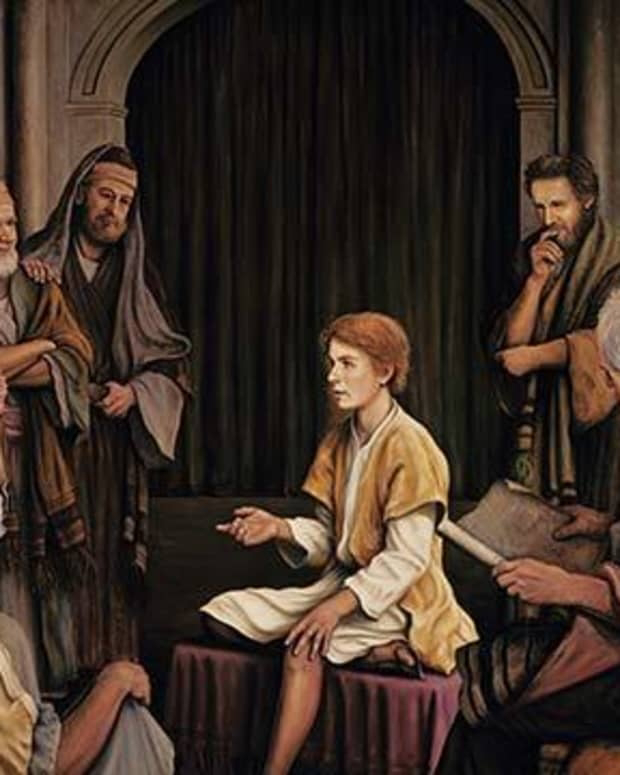
I work in the temple, it’s been so busy with Passover, I was looking forward to a bit of rest – but then I met The Boy. Ordinary looking, but so very not ordinary.

He wanted to talk about God! Why not? That’s the best thing a boy could want, so I took him to where the men were debating. I don’t know what I expected but my goodness….his answers, his questions! The sophistication of his thoughts and understanding of God. So raw, so pure.

I think he would have talked all night but I needed to get home, and I hadn’t seen him stop to eat. I invited him home to eat with my wife and I, and then with seemingly no where to go he stayed overnight.

The next day we returned to the temple and started again. For nearly five days this continued. Of course, we asked him about his parents and he spoke of them with such love, but no indication of where they were. We were getting used to him, both in the temple and at home.

I couldn’t help but wonder if we might have gained a lodger, we’d have been more than happy for him to stay. But then on the fifth day a man dashed in, wild-eyed, a mixture of relief and rage:

“Jesus, where have you been?? How could you do this??”
“you should have known I’d be in my father’s house” the boy replied.

I saw the mother in the partitioned area, wringing her hands. I led the boy and his father over to her and the three embraced, although the boy still didn’t seem to understand he’d scared them half to death.

I invited them all back home, to begin their journey anew in the morning. As I passed by the room where the couple were sleeping I couldn’t help – God forgive me – but over hear what the mother said:

“We’ve become complacent Joseph, since our return from Egypt, we’ve got so used to him being a normal boy, it’s made us forget he’s anything but ordinary. We must hold him lightly, my love, he’s never truly been ours after all”.

I often wonder what she meant? And I wonder if I’ll ever hear from the boy again. I feel like there’s greatness in his future.

The exercise ends with the following prayer:
Lord Jesus, from the start
You invite ordinary people to come to where you live.
When they come, you welcome them
and call them to labour and rejoice with you.
You are the most beautiful among all men,
and I hardly believe you want me for your friend.
You are powerful, Lord.
Draw me more and more into your friendship
and lead me along the way you took with friends.
—Joseph Tetlow

Justice and Joy

Preached on the 15th December and forgot to post...

We’re 3 weeks into Advent already – can you believe it? Without a word of exaggeration about 20 people have asked me this week if I’m ready for Christmas, and I’ve given the same answer every time – I’ve never ready…and yet… Christmas comes anyway. It being the third Sunday of Advent means it’s Gaudete (Gow-d’-tay) Sunday- the Latin for Rejoice.

This theme runs through our readings: Zephaniah’s Song of Joy declares:
Sing aloud, O daughter Zion;
   shout, O Israel!
Rejoice and exult with all your heart,
   O daughter Jerusalem!

In his letter to the Philippians, St Paul tells us:
Rejoice in the Lord always; again I will say, Rejoice. Let your gentleness be known to everyone. The Lord is near. Do not worry about anything - Which is pretty much my mantra during Advent.

So far so good, we’re feeling those rejoicing vibes…and then… we get to John in our gospel reading from Luke – what an absolute downer! How can this man have been the baby who leapt for joy inside pregnant Elizabeth when she encountered Mary, pregnant with Jesus? He’s grown into a proper misery-guts.
How can John’s words give us cause to rejoice?

What I’ve read this week is that it’s all about perspective, that what concerns John are the things which will make God rejoice, this flips it on its head and gives us a different way of thinking about John’s words…

…and John doesn’t mince his words, a prophet is a speaker of truth, particularly speaking truth to power, and pointing out hypocrisy and injustice, and when you examine it, it’s justice which is at the heart of the advice John gives to those who come to him, asking what they must do. Justice and joy are at the heart of God’s kingdom.

At the start of this 3rd chapter of Luke’s gospel we hear of Emperor Tiberius, Pontius Pilate, Herod, his brother Philip, Lysanias of Abilene, and the high-priests Annas and Caiaphas. Immediately after this we’re told; the word of God came to John son of Zechariah in the wilderness.

God didn’t send his word to the Emperor, the Governor, the kings or high-priests; he sent it to rest upon an eccentric in the desert. Where humankind thinks power and wisdom reside are very different to where God actually places them, so it may also be worth looking a little differently at what we think John is saying to those around him.

It strikes me what a diverse group of people have been drawn to John. Ada Wong Nagata writes: The crowd seems to represent the Jews who have enough; the tax collectors, the outcasts; and the soldiers, the gentiles. They all seek to change their lives. Even though John is harsh in the beginning, he gives advice to them all. John’s advice is not dramatic, he just asks them to turn from what they are doing their own way, and instead to start doing things the right way—God’s way.

Marcea Paul tells us: John doesn’t ask the people to change the world, but rather to change themselves. He doesn’t tell them to leave their lives and stay with him or start a revolution; he tells the crowds who came to him to consider sharing what they have with the cold and hungry. He told the tax collectors to be honest and fair. The soldiers, he cautioned to act with integrity, avoiding abuse of their power. “Go home,” John told them. Go home to your families, your neighbours, your vocations, your friends. Go home and live your lives as deeply and as generously as you can right now. Do what the Lord requires of you and do it now. Be generous now – Be merciful now – Do justice now.

For me this turns around the perceived harshness of John’s words, into something where if we were to go and live out that advice, I’m sure it would create something which would make God rejoice.

But what about the wheat and the chaff? How can that possibly be something worth rejoicing about? Well, I think that has something to do with what the wheat and chaff truly represent.

Have you ever met anyone who’s completely good? Even the best person you know? What about the worst person you’ve ever met? They can’t have gone through life without, even accidentally, doing something good. Surely no one is all bad or all good? How then will we be judged on who is wheat and who is chaff? I think the answer is, we’re all both.

We’re made of both wheat and chaff, good and bad, our hope is that living as people who love Jesus, who desire to follow his teaching, that when we’re baptised in his Spirit and flame, the Spirit fills our hearts, and the fire burns away our chaff.

Our chaff are the times we didn’t consider the outcast, the times we didn’t share the ways in which we’ve been blessed by plenty, the times we haven’t been honest and fair, when we acted without integrity or abused our power.

The longer we sit in the burning heat of Christ’s love, immerse ourselves in his ways, the more of the chaff gets burned away – it’s like the refiner’s fire of Zechariah 13:9:
And I will put this third into the fire,
    refine them as one refines silver,
    and test them as gold is tested.
They will call on my name,
    and I will answer them.
I will say, ‘They are my people’;
    and they will say, ‘The Lord is our God.’

I think God may indeed rejoice at seeing our closeness to Jesus, refining us in his fire, and becoming more fully the person God intends us to be.

I think, generally, we’re not very good at doing Advent, the penitential, prayerful preparation that it’s intended to be, but we’re here, trying our best to be close to Jesus, letting ourselves be slowly refined, bit by bit, year upon year. And I think that refinement leads us to change not the world but ourselves, as John advises his listeners, and if enough of us make those changes it does, in time, change us, our families, our communities and then, eventually, can change the world.

To go back to that question I, and probably you, am being asked constantly right now, are you ready for Christmas - how can we ever be ready for Christmas? For Godself to come and live amongst us with his spirit and flame? Where would we even begin to prepare?

So, as John was sent to prepare to way for Jesus, I guess the best thing we can do is follow his advice, and change ourselves, to focus on God’s rejoicing, and on seeking God’s justice and joy right here, today.
It’s comforting. In a world where we can change so little, where our anguish and anxiety are rising over wars, climate crisis and those gaining political power, our comfort comes in seeking what God seeks; justice and joy.

So Gaudete! Rejoice! Rejoice in the Lord always; again I will say, Rejoice. Let your gentleness be known to everyone. The Lord is near. Do not worry about anything.
Amen