Showing posts with label christian. Show all posts

Sunday, 13 July 2025

Finding your work

May I speak in the name of the one God, who is Speaker, Word and Breath.

Stu mentioned a couple of weeks ago about the theme running through our readings and sermons recently around faith and acts – the belief that if our faith really reflects who God is, that will then be reflected in how we conduct ourselves in the world- the people we are, the things we do, the decisions and choices we make.

This seems to neatly come together this morning in probably the most famous example of loving action, the tale of The Good Samaritan – and it is a tale rather than a parable. There’s nothing in it that’s metaphorical, it’s very clear. It’s our job to be merciful, compassionate neighbours in the world.

Those of us who’ve been or are nurses will know there’s two types of nurse; if when you’re going about you normal life there’s some sort of medical emergency – someone collapses in the middle aisle of Aldi - and there’s a shout for medical help, are you the nurse who immediately runs forward, or the nurse who waits 10 seconds to see if someone else runs goes first?

I’m definitely in the second camp, I’m a fantastic nurse in a hospital-based emergency, but out in the wild is a different matter! I think the older and wiser we get the less likely we are to immediately jump in there – with age and wisdom we recognise our limits.

Or maybe we recognise what is ours to do and what isn’t. An up to date first aider might actually be more useful in that situation than someone who’s used to being surrounded by all the help and equipment you could wish for.

That level of self-reflection isn’t, as far as we know, seen in our priest and Levite this morning. They’re not waiting to see if someone else jumps in, thinking if someone else doesn’t step forward then they will, or reflecting there may be someone better equipped, it’s a very clear head down, walk-on-by scenario.

We’ve heard this story so many times - I can remember at priest school having an activity where we re-wrote it in a modern setting - but examining the story through our current lens, reflecting upon faith leading us into action, why did these people of faith not act? Considering this might help us to understand the times when we ourselves have felt we could do nothing but look the other way, despite our faith in God.

Fear could be one answer. What if he’s contagious? They may not have looked closely enough to see he’d been attacked – they just see a man lying there, half dead. He could have a contagious illness. If they catch it and become sick who’ll provide for their families? They have important jobs and responsibilities. Who’ll see to those?

There could be the fear that it’s a trap. If this area is renowned for attacks, it may be known that this is one way the thieves operate to lure in victims.

There’s Mosaic law to consider – if the man is dead, and they can’t tell at this point – if they touch him, they can’t do their jobs for 7 days, they’ll be ritually unclean. They can’t let that happen, again they’re important, relied upon. They’re men that matter.

Another explanation could just be complacency -how often do they see bodies or people collapsed by the side of the road? It could be over-saturation, compassion fatigue. Maybe they’ve stepped in before and it cost them in some way, maybe they see so many people collapsed along that road that if they stopped to help everyone they’d never get anywhere.

So we have fear, personal cost and complacency. I’m not going to lie, that sounds pretty familiar to me at the moment. Whilst writing this there was a charity advert on the TV in the background which I’ve seen dozens of times – a young boy in an African country at the risk of going blind. If I stop to actually pay attention to it, think of the enormity of the issue it's implications, It’ll break my heart. Sometimes we feel we have to protect ourselves from feeling empathy because it could break us.

We do have to have boundaries and protect ourselves from over-saturation of media and news and sadness, just so we can go about our lives. If we let every awful thing we have knowledge about into our hearts we’d be paralysed by not only the sadness but the knowledge that we simply can’t help every person or situation we’d like to. There’re things that are just too big for us to tackle or effect. Those in need are simply too numerous.

How does this fit with our theology of faith leading to action? How can we navigate this alongside our belief in the universal neighbourhood? The whole point of Jesus telling this tale is to help the young lawyer see that anyone who needs our mercy, or who shows us mercy, is our neighbour, and there’s a big scary world our there very much in need of mercy.

I read something by the wonderful Revd. Nadia Bolz-Weber a couple of years ago – I was actually talking to Joanne about this yesterday – to summarise, as I can’t find the actual quote, Nadia wrote that the way we’ve been created, and the world be now inhabit are out of alignment. We we’re created to be people of community and created to be able to carry the worries, concerns, anxieties and stresses of that community, or village or tribe.

With 24-hour news cycles, our connectedness and the global nature of modern life we’re trying to carry the worries, concerns, anxieties and stresses of an entire world, and we simply can’t do it, we’re not built for it…so what do we do?

Seeing the suffering and looking away, turning a blind eye, isn’t an option, because we see our neighbours, those in need of mercy, and our hearts ache for them, because we are people of faith, people who hunger and thirst after righteousness, people who like the Samaritan of the story are moved from our very guts with compassion- that’s the literal translation of the Greek – compassion you feel in your spleen.

Nadia Bolz-Weber also has this to share when it comes to the burn-out that can come from carrying global sorrows in our heads and hearts:

Every day of my life I ask myself three discernment questions:
What’s MINE to do, and what’s NOT mine to do?
What’s MINE to say and what’s NOT mine to say?
And the third one is harder:
What’s MINE to care about and what’s NOT mine to care about?

To be clear – that is not to say that it is not worthy to be cared about by SOMEONE, only that my effectiveness in the world cannot extend to every worthy to be cared about event and situation. It’s not an issue of values, it’s an issue of MATH.

It’s ok to do what is YOURS to do. Say what’s yours to say. Care about what’s yours to care about. That’s enough.

This is all part of being the body of Christ; we each have our role, our separate functions that ensure the body keeps working and moving.

The hope is that if we’re each finding out what work is ours to do, then all the things which need work, the peoples and situations that require our mercy, that require someone to be a neighbour, will eventually have people, enough people, and the right people, whose work it is to be a Christ-like, spirit-filled presence there.

We won’t need to fear, worry about the personal cost or feel complacent in the suffering we see, we won’t need to cross over, pretending we don’t see what’s happening, because someone will already be there, tending the wounds, and we’ll be tending to the wounds we’re called to bandage.

And if we’re outraged by a situation and asking where the mercy is, where the neighbours are, then maybe that’s a sign of the work which is ours to do.

I’m sure you all know that one of my great passions is inclusion – not just inclusion but belonging. I want anyone to walk through that door and feel they belong. That’s part of my work.

My years as a nurse have led me into my current role in staff support and improving culture. That’s part of my work.

Your work might be speaking out against the Palestinian genocide, standing with refugees, fighting for the rights and inclusion of older people, working to support our local domestic abuse charity.

Where is God calling you to carry Gods name and do Gods work? Where are you moved to your spleen with compassion? Listen to the calling and the feelings, if you’re coming back to the same issue or situation time and time again, chances are that’s the work God is showing you is yours.

See it as an invitation, or even a challenge from God. Identify where you’re being called, answer that call, and start the work. Amen

Growing together

A short address from the double vow renewal that was held at St Michael's yesterday

I wasn’t sure if I was going to make an address today, but the more I thought about it this morning, the more appropriate it felt to take a moment during this glorious celebration of marriage and love, for Paula & Wayne, and Nica & Med, a moment to pause and reflect upon these milestones – 25 years for Paula & Wayne and 50 years for Nica & Med – for which this holy and sacred place has played such an important part.

We were looking at Nica and Med’s wedding photos yesterday evening, and it was so glorious not only to see the joy in their youthful and hope-filled faces and some very impressive fashion, but also the evolution of the church – oh and Med’s very impressive hair!
Because everything and everyone evolves over time, 50 years may not feel particularly long in the life of a church building (when some bits of it can be dated back to the 1500s) but there are some significant changes. Each of you will have evolved as people over the course of your marriages, and thank God you’ve grown and changed together when so many of us grow apart in our relationships.

There are 2 trees out the back of the church, near the garden of remembrance, which are so close that even though they’re different species, the way they’ve grown they’re so intertwined that even though you can see that they’re different trees, they’ve grown together to make something new, something beautiful and entirely unique.

The beauty of growing together is clear from each of your relationships – your bond of love and marriage has created something strong and something beautiful. And St Michael’s being part of that means that right from the start of your marriages God was there too, helping the nurturing, the growth and of course the love.

The reading from 1 Corinthians tells us how God loves and gives us a template for how we ought to love each other – with compassion, kindness, humility and patience. With a combined 75 years of marriage between you I think you’re probably doing OK with holding to these qualities, the things which nourish the roots of a relationship.

My prayer for each of you today is that as you continue your lives together, joined in the sacred covenant of marriage, that you continue to grow together in love, upholding and supporting each other through both the joys and challenges of life, and that through all of this you remember that God, who blessed you on your wedding day and blesses you today, is always with you, encircling you with never-ending, unconditional love. Amen.

Sunday, 22 June 2025

Anything to declare?

May I speak in the name of the One God, who is Speaker, Word & Breath.

Very much like the last time I was with you, I wasn't expecting to write a sermon this week, so again I’ve just tried to put some thoughts together around the readings – and they are an amazing three readings!!

I didn’t know where to look first – we have the earthquake, wind and fire, followed by the silence where God was to be found. 

We have a reading that I, as someone who is passionate about justice and equity, love - There is no longer Jew or Greek, there is no longer slave or free, there is no longer male and female; for all of you are one in Christ Jesus.

And then, the weird and wonderful gospel story of Jesus healing the demoniac who lived naked among the tombs, sending the demons who call themselves Legion into the herd of pigs and over a cliff.

There’s so much to unpick in the gospel reading, but I get uncomfortable when contemporary writers or preachers try to explain demons or relate them to our modern understanding of various mental health or psychiatric conditions.

I’m sure than if like me you have people in your life, or even yourselves, who've experienced or are experiencing various mental health challenges, you wish that faith or prayer could heal them, but it's more complex than that, and there’s a lot more nuance needed when venturing into this area, so that’s not the road I’m going down.

What strikes me when we put these readings together is the sense of God’s power and how unexpected it is in relation to humankind’s idea of power – and that’s often the case when we look at God through the lens of Jesus.

There was a great wind, so strong that it was splitting mountains and breaking rocks in pieces before the Lord, but the Lord was not in the wind; and after the wind an earthquake, but the Lord was not in the earthquake; and after the earthquake a fire, but the Lord was not in the fire; and after the fire a sound of sheer silence.

Elijah witnesses the power of nature, of God’s created order – the power of the physical world. But that’s not where Elijah finds God. Elijah finds God in the quiet that comes after that, and maybe some of us can think of times that this was our experience as well.

There’re two very good films about the nature of faith and silence and I’d recommend them both – the first is Into Great Silence, an almost wordless film which follows a year in the life of silent Carthusian monks who live high in the French Alps – it’s a 2 hour and 40 minute meditation on how silence and prayer in extremis shape the lives of these men.

The other is Martin Scorsese’s Silence, one of the most complex and challenging films of this century – both intellectually and spiritually. It tells the story of Portuguese Jesuit priests in feudal Japan. For me the film is about how complex faith and our relationship with the divine is, especially displayed in the character Kichijiro, locked in a cycle perpetual penitence as he continually renounces then reaffirms his belief. It’s in part a film about what we do with our faith when we don’t hear God in the silence, and the power God still has in that.

The reading from Galatians for me demonstrates the power of God to make all people equal because There is no longer Jew or Greek, there is no longer slave or free, there is no longer male and female; for all of you are one in Christ Jesus.

God’s love through Jesus is the great leveller – when Mary sings the Magnificat and declares: He has brought down the powerful from their thrones, and lifted up the lowly, it doesn’t mean raising one above the other but bringing them both to a place where they’re equal – it’s true equity, and that’s the power God has to bring justice into our world.

The labels we put on each don’t really matter as we’re all part of the body of Christ, all uniquely and beautifully different, all contributing our own thing, but all beloved children of the same divine parent.

In the gospel reading there’s so many ways we could interpret God’s power at work, but for me it’s all summed up in the last words we hear from Jesus in the passage: Return to your home, and declare how much God has done for you.

The everyday power God has in our lives is letting us see that now matter who we are, where we’ve been, what we’ve done or what we’ve experienced, when we welcome the power of God into our life the old narratives of who were, or thought we were, whatever other people may think we are, everything can be turned around, everything can change.

It can sometimes happen in a miraculous and dramatic moment as in our gospel, it can provide that powerful testimony capable of changing the lives of other people, or it can come, probably more often, in the way we evolve and change over time, with God’s powerful love working in us and being reflected to those we connect with.

I’m reminded again of The Magnificat: the Mighty One has done great things for me, and has done great things for us, and when we recognise this, it becomes our turn to go and declare how much good God has done for us.

Our lives and how we choose to live them are each examples of God’s power at work – and that power may be in silence, or in seeking justice and equity, or in our own stories of how our lives have been healed or reconciled, drawing us further into communion with Jesus.
Amen.


1 Kings 19:1-4, (5-7), 8-15a
1Ahab told Jezebel all that Elijah had done, and how he had killed all the prophets with the sword. 2Then Jezebel sent a messenger to Elijah, saying, “So may the gods do to me, and more also, if I do not make your life like the life of one of them by this time tomorrow.” 3Then he was afraid; he got up and fled for his life, and came to Beer-sheba, which belongs to Judah; he left his servant there. 4But he himself went a day’s journey into the wilderness, and came and sat down under a solitary broom tree. He asked that he might die: “It is enough; now, O Lord, take away my life, for I am no better than my ancestors.” [5Then he lay down under the broom tree and fell asleep. Suddenly an angel touched him and said to him, “Get up and eat.” 6He looked, and there at his head was a cake baked on hot stones, and a jar of water. He ate and drank, and lay down again. 7The angel of the Lord came a second time, touched him, and said, “Get up and eat, otherwise the journey will be too much for you.”] 8He got up, and ate and drank; then he went in the strength of that food forty days and forty nights to Horeb the mount of God.

9At that place he came to a cave, and spent the night there. Then the word of the Lord came to him, saying, “What are you doing here, Elijah?”10He answered, “I have been very zealous for the Lord, the God of hosts; for the Israelites have forsaken your covenant, thrown down your altars, and killed your prophets with the sword. I alone am left, and they are seeking my life, to take it away.” 11He said, “Go out and stand on the mountain before the Lord, for the Lord is about to pass by.” Now there was a great wind, so strong that it was splitting mountains and breaking rocks in pieces before the Lord, but the Lord was not in the wind; and after the wind an earthquake, but the Lord was not in the earthquake;12and after the earthquake a fire, but the Lord was not in the fire; and after the fire a sound of sheer silence. 13When Elijah heard it, he wrapped his face in his mantle and went out and stood at the entrance of the cave. Then there came a voice to him that said, “What are you doing here, Elijah?” 14He answered, “I have been very zealous for the Lord, the God of hosts; for the Israelites have forsaken your covenant, thrown down your altars, and killed your prophets with the sword. I alone am left, and they are seeking my life, to take it away.” 15Then the Lord said to him, “Go, return on your way to the wilderness of Damascus.”

Galatians 3:23-29
23Now before faith came, we were imprisoned and guarded under the law until faith would be revealed. 24Therefore the law was our disciplinarian until Christ came, so that we might be justified by faith. 25But now that faith has come, we are no longer subject to a disciplinarian, 26for in Christ Jesus you are all children of God through faith. 27As many of you as were baptized into Christ have clothed yourselves with Christ. 28There is no longer Jew or Greek, there is no longer slave or free, there is no longer male and female; for all of you are one in Christ Jesus. 29And if you belong to Christ, then you are Abraham’s offspring, heirs according to the promise.

Luke 8:26-39
26Then they arrived at the country of the Gerasenes, which is opposite Galilee. 27As he stepped out on land, a man of the city who had demons met him. For a long time he had worn no clothes, and he did not live in a house but in the tombs. 28When he saw Jesus, he fell down before him and shouted at the top of his voice, “What have you to do with me, Jesus, Son of the Most High God? I beg you, do not torment me”— 29for Jesus had commanded the unclean spirit to come out of the man. (For many times it had seized him; he was kept under guard and bound with chains and shackles, but he would break the bonds and be driven by the demon into the wilds.) 30Jesus then asked him, “What is your name?” He said, “Legion”; for many demons had entered him. 31They begged him not to order them to go back into the abyss. 32Now there on the hillside a large herd of swine was feeding; and the demons begged Jesus to let them enter these. So he gave them permission. 33Then the demons came out of the man and entered the swine, and the herd rushed down the steep bank into the lake and was drowned. 34When the swineherds saw what had happened, they ran off and told it in the city and in the country.35Then people came out to see what had happened, and when they came to Jesus, they found the man from whom the demons had gone sitting at the feet of Jesus, clothed and in his right mind. And they were afraid.36Those who had seen it told them how the one who had been possessed by demons had been healed. 37Then all the people of the surrounding country of the Gerasenes asked Jesus to leave them; for they were seized with great fear. So he got into the boat and returned. 38The man from whom the demons had gone begged that he might be with him; but Jesus sent him away, saying, 39“Return to your home, and declare how much God has done for you.” So he went away, proclaiming throughout the city how much Jesus had done for him.

Monday, 19 May 2025

Love is a many splendored thing

Love is a many splendored thing
Love lifts us up where we belong
All you need is love!
I was made for loving you
I will always love you
I can’t help loving you

The keen eared musical fans in the room may recognise some of the lyrics from the Elephant Love Medley from Moulin Rouge, a mash up of some of the best and most cliched love song lyrics, where our young hero, Christian, tries to convince Satine, a girl he’s literally just met, that love is the only thing that matters.

And he might be right, but that all consuming romantic obsessional love is not what Jesus was referring to in today’s gospel, but maybe it should make us as fired up and willing to devote our entire lives to, that’s certainly what happened in the case of the disciples.

“Just as I have loved you, you also should love one another. By this everyone will know that you are my disciples, if you have love for one another.” How do you think we’re doing with that? Do we recognise other Christians by their signs of love, or do we recognise someone as a Christian by them declaring themselves to be one?

I don’t think I’m going to solve the centuries old theological debate of faith vs actions on this sunny May morning, but I do tend to side with the author of the letter from James that, yes faith is enough, but that true faith leads us to live our lives in a particular way, to act towards our brothers and sisters in the world in a particular way, that true faith transforms us into people who perform loving actions.

Not that we always get that right, almost every high-profile Christian we could name off the top of our heads also will have some sort of controversy linked to them or examples which only demonstrate that our humanity, even as loving, faithful children of God, makes each and every one of us messy, well intentioned, contradictions.

Speaking of which, let’s talk about Peter, as usual caught up in some new controversy. Now Luke, writer of the Book of Acts, thinks this episode is so important that he tells it twice.

What I love about Peter is how we see him get things wrong, but then learn and grow, and here we find him in the middle of an early church debate about rules, orthodoxy and what really makes you a follower of the way. And this has come about because people are joining their numbers, and have been since before Jesus died, who aren’t Jewish, who don’t have the same background of faith, customs and most importantly Mosaic law.

It's not going to be too long before the number of non-Jewish followers outnumbers Jewish followers, so these sorts of questions must have been really important.

How can they be one body of Christ, sharing in the eucharistic meal, if they can’t even eat in the same house?

There’s an argument that it’s the Jewish people’s differences that have assured their survival for so long, their laws, customs, strict rules around conversion and marriage, so they kept their identify despite the Egyptians, the Assyrians, the Babylonians, the Persians, and the Romans. They maintained their identity as set-aside, God’s special people.

There must have been a real fear amongst the Jewish followers because everything in their history and experience up until this point has told them they are not like the gentiles that they must remain set-apart, yet the waters were muddied by Jesus himself who began ministering to non-Jewish followers, Romans, Samarians, Greeks, and inviting them to follow him.

So questions were asked – should the gentiles convert to Judaism, should they be circumcised, and should they follow the food laws. Peter tells them of his experience, and the words which have been so important to me personally “What God has made clean, you must not call profane.” God has created all things, all people, so there is nothing on the earth that doesn’t have its beginning in scared holiness.

What Peter demonstrates, with God’s stamp on it, is a living out of the commandment to love, which I try and apply to every area of my understanding of God, Jesus and the living out of my faith in the world. Does it come form love?

God is love and love is God. Did it feel like love to abide by the strict rules of their tradition, or did it feel like love to share food with a fellow believer? When we see contradiction in the bible, in theology, in dogma, in practice, we need to ask ourselves what feels like love?

Peter and the early church are coming to realise what we hear in John’s vision in the reading from revelation: “See, I am making all things new.”

What is developing is neither Judaism nor an assimilation of the customs of the various gentile groups, but something completely new. A new commandment, a new way of being, a new faith, whose followers have a personal, intimate relationship with God because God has walked beside them, broken bread with them, died for them, invited them to touch his wounds, and loved them. Through their flaws and imperfections – through our flaws and imperfections – God loves us because God has made us and that makes us Holy.

To return to recognising Christians by our love of other people, Jesuit professor Bruce Morrill, writes:
“What distinguished the followers of Jesus and successive generations of Christians was their outreach to the poor and sick, the practical love they demonstrated in openly forming fellowship groups (local churches) that actively reached out in service to the poor, the hungry, and the sick.”

And we still see that in the world today. Our systems of healthcare have their roots in our loving faith. Our faith is based in caring for others, in building relationships and being in fellowship with one another. To love each other we don’t have to agree on everything, but we do need to put loving people before rules. Also central to our tradition is how it evolves with our understanding.

Jesus and the early church invited those who were different, not accepted under the law, had terrible pasts or who were in other ways social outcasts because God loves them. We have evolved over the past few decades to marry those who’re divorced, ordain women, actively invite LGBTQ people to be in full communion with us because God loves them.

We’re now allowed to bless same-sex unions, even if the move that doesn’t go far enough in my eyes, because God loves them.

As I started with song lyrics I’m going to end with them too. The reading from revelation always puts in my mind a song I play every year at the end of our Good Friday Footsteps to the Feast Service – Trusty & True by Damien Rice.

We can't take back what is done, what is past
So let us start from here
If all that you are is not all you desire, then come
come alone, come with fear, come with love
Come with friends, come with faults
Come with me, and let go
Come so carefully close
Come with sorrows and songs
Come with yourself below
Come however you are
Just come

That’s all we need to do, come however we are to this new amazing thing God has gifted to us, to drink from the spring of the water of life so freely given, but not just to drink but to share it, to invite others to come, to offer them what is given to each and every sacred and holy person who desires it.

Because love dictates that this is way too good to keep to ourselves, it’s our job to share God’s love with each and every person we meet, whether they return love is up to them. Let our actions be loving so we can be known by our love, not by hate, disapproval or rules.

And we don’t just share that love with those we agree with, who look like us or act like us, that love, that invitation, our faith, is for each and every holy and sacred person in creation. Amen.

First Lesson: Acts 11:1-18
1Now the apostles and the believers who were in Judea heard that the Gentiles had also accepted the word of God. 2So when Peter went up to Jerusalem, the circumcised believers criticized him, 3saying, “Why did you go to uncircumcised men and eat with them?” 4Then Peter began to explain it to them, step by step, saying, 5“I was in the city of Joppa praying, and in a trance, I saw a vision. There was something like a large sheet coming down from heaven, being lowered by its four corners; and it came close to me. 6As I looked at it closely I saw four-footed animals, beasts of prey, reptiles, and birds of the air. 7I also heard a voice saying to me, ‘Get up, Peter; kill and eat.’ 8But I replied, ‘By no means, Lord; for nothing profane or unclean has ever entered my mouth.’ 9But a second time the voice answered from heaven, ‘What God has made clean, you must not call profane.’ 10This happened three times; then everything was pulled up again to heaven. 11At that very moment three men, sent to me from Caesarea, arrived at the house where we were. 12The Spirit told me to go with them and not to make a distinction between them and us. These six brothers also accompanied me, and we entered the man’s house. 13He told us how he had seen the angel standing in his house and saying, ‘Send to Joppa and bring Simon, who is called Peter; 14he will give you a message by which you and your entire household will be saved.’ 15And as I began to speak, the Holy Spirit fell upon them just as it had upon us at the beginning. 16And I remembered the word of the Lord, how he had said, ‘John baptized with water, but you will be baptized with the Holy Spirit.’ 17If then God gave them the same gift that he gave us when we believed in the Lord Jesus Christ, who was I that I could hinder God?” 18When they heard this, they were silenced. And they praised God, saying, “Then God has given even to the Gentiles the repentance that leads to life.”

Second Lesson: Revelation 21:1-6
1Then I saw a new heaven and a new earth; for the first heaven and the first earth had passed away, and the sea was no more. 2And I saw the holy city, the new Jerusalem, coming down out of heaven from God, prepared as a bride adorned for her husband. 3And I heard a loud voice from the throne saying, “See, the home of God is among mortals. He will dwell with them as their God; they will be his peoples, and God himself will be with them; 4he will wipe every tear from their eyes. Death will be no more; mourning and crying and pain will be no more, for the first things have passed away.” 5And the one who was seated on the throne said, “See, I am making all things new.” Also he said, “Write this, for these words are trustworthy and true.” 6Then he said to me, “It is done! I am the Alpha and the Omega, the beginning and the end. To the thirsty I will give water as a gift from the spring of the water of life.

Gospel: John 13:31-35
31When he had gone out, Jesus said, “Now the Son of Man has been glorified, and God has been glorified in him. 32If God has been glorified in him, God will also glorify him in himself and will glorify him at once.33Little children, I am with you only a little longer. You will look for me; and as I said to the Jews so now, I say to you, ‘Where I am going, you cannot come.’ 34I give you a new commandment, that you love one another. Just as I have loved you, you also should love one another. 35By this everyone will know that you are my disciples, if you have love for one another.”

Sunday, 20 April 2025

It''s That Simple

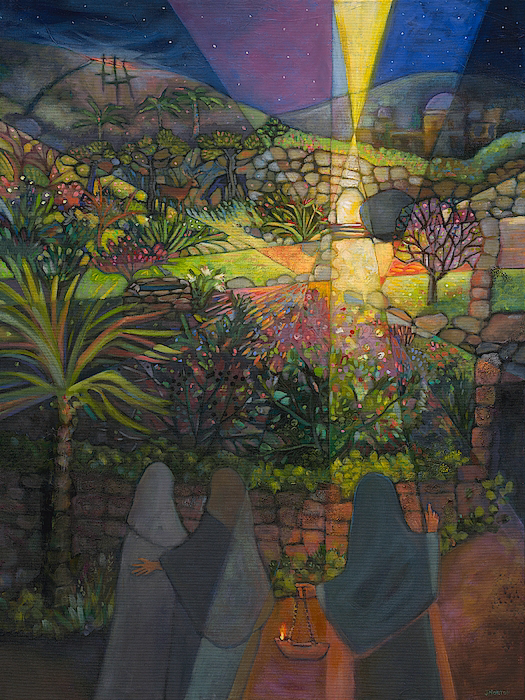
It was a cool morning, although the first rays of sun appearing were a sign it wouldn’t remain that way. I can remember thinking – wondering I suppose – where I might be walking to without the generosity of Joseph, the Arimathean – for a member of the Sanhedrin it was a dangerous act to provide us with a tomb, but who knows where I would have been heading if he hadn’t.

The first thing I felt was confusion – as soon as I entered the garden, I knew something wasn’t right – you get that feeling sometimes, don’t you? That first hint, the slightest perception, of things not being as they should be.

After the confusion, or maybe alongside it, was the fear, seeing that huge boulder moved from the entrance – something that took a dozen of us to put in place – I knew for certain then – thought I knew – that our Lord’s body had been taken, stolen away, only God knows for what end.

I was too churned up to look inside, terrified of what I might see, without knowing what any of us could do I ran back to where we were lodged (praise God for our protectors) and I saw Simon Peter and John speaking by the door.

I must have looked like a wild woman, completely incoherent, I no idea what I might say to them.
Peter asked “Mary, what is it, what’s happened?!”
Barely able to speak, something just burbled out between the tears. John of course wrote it down later:
‘They have taken the Lord out of the tomb, and we do not know where they have laid him.’ He reports I exclaimed, between the sobs.

Once they’d taken this in, they looked at each other with the same panicked expression that must have been on my face, touched my arm, and ran back in the direction I’d come from.

At this point I could barely catch my breath, but I turned and followed them back, my chest and calves burning, unable to keep up with them at all. I could see that John had got ahead of Peter, but when I eventually caught up, I could see John just standing at the entrance, finding himself unable to enter.

For once I was thankful for Peter’s impulsive nature, he overcame our collective fears to enter the tomb, whilst John and I seemed rooted to the spot, although in all honestly, I was so exhausted from running there and back that I’d sunk down to ground by this point, my breathing loud and laboured as my body recovered.

Peter emerged so quietly, a look of incomprehension on his face. He told us how the linen wrappings were just lying there, and that the cloth that had been on Jesus’ head was separate, not lying with the linen wrappings but rolled up in a place by itself.

This is where John had to see for himself, also entering the tomb, seeing that all was as Peter had said. Now, you must understand that despite everything we’d experienced with the teacher, everything we’d been told and witnessed, none of us yet understand the scripture that told us He must rise from the dead.

With no understanding of what this meant or where Jesus’ body might be, the men left, returning to the house.

And I sat, and I wept. I wept from fear, I wept from confusion and frustration, but mostly I wept from grief, and from love. I wept because I was confronted with the reality of Jesus’ death, and now I couldn’t even mourn his body, or honour him with our traditions.

Between my sobs, I felt compelled to look for myself, to see what the men had seen, to know with my own eyes that it was true. I heaved my exhausted body from the ground and stooped to look inside the tomb. But I didn’t see what Peter and John had seen.

I’ll probably sound like a mad woman – probably this whole story makes me sound like a mad woman – but I don’t care, I saw what I saw, and I believe what I saw.

When I looked inside the tomb, I saw what I can only describe as two angels in white, sitting where the body of Jesus had been lying, one at the head and the other at the feet. They must have been angels, there were certainly not of the earth. And they spoke to me, or at least I heard the words inside my head, it’s hard to explain when you’ve encountered angels!

They asked me: ‘Woman, why are you weeping?’ and I’m sure I repeated the words John tells me I said to him: ‘They have taken away my Lord, and I do not know where they have laid him.’

I often wonder what they might have replied if I hadn’t at that point become aware of someone standing behind me. Not knowing if it was of the men returned, another disciple come to grieve or a soldier alerted by our comings and goings, I turned sharply to see the gardener in front of me, or the person I presumed was the gardener by his appearance.

He repeated the words of the angels – making me think for a moment I’d imagined them and this man had been saying the words all along. ‘Woman, why are you weeping?’ – a ridiculous question to a woman visiting a tomb! Before I could answer he questioned ‘For whom are you looking?’

Beginning to retain some semblance of rational thought – despite all I’d experienced before the sun was even fully risen – it struck me that this man may have seen something, if he tended to this place, he would maybe know who had come and gone, or maybe even he’d been paid or instructed to move Jesus by the authorities?

I took a breath, ‘Sir, if you have carried him away, tell me where you have laid him, and I will take him away.’ I looked into his eyes, silently pleading.

His response was just one word, ‘Mary’. And in an instant I knew. He said my name, as He had done so many times, but this time I felt it’s resonance through my entire body. With one word my eyes were opened, and I saw Jesus stood before me, and I knew more than ever that my soul and body would for the rest of my life be a living sacrifice to him.

“Teacher!” I exclaimed and dropped to my knees. I needed to touch him, to kiss his feet, to anoint them with my tears which were now tears of joy, but he stepped back from my reach.

“Do not hold on to me Mary, because I have not yet ascended to the Father. But go to my brothers and say to them, “I am ascending to my Father and your Father, to my God and your God.”

And then, I don’t know if he was gone or if I turned, but I was running once more back to the town and to the others, still so confused but with a surety of what I needed to do for our Lord, our Jesus, our rabbi – our Christ, The Messiah! Oh my God, my God! It was all true. He is my God.

I’ll never know why He chose me as the first witness – as the first to share the news and make sense of his teachings. In three days he had risen again, he told us so many times this would be so but until this moment we had never truly understood.

I banged on the door of our lodging house – I didn’t care if I was seen or heard, not anymore. I told them quite simply “I have seen the Lord”, then recounted all these things I have told you here.

They heard my testimony, and they believed, and that belief spread. We told people the good news – that we have a God who knows us, who came to live alongside us, who has shared our joys and our griefs, who has shared our food, who knows what it is to strive - who knows no one is holy enough to obey all the laws of moses and so gives us the most simple instruction; to love.

To love God and each other. It’s that simple. Our God is the God of love.
Amen
Sermon based upon John 20:1-18
20Early on the first day of the week, while it was still dark, Mary Magdalene came to the tomb and saw that the stone had been removed from the tomb. 2So she ran and went to Simon Peter and the other disciple, the one whom Jesus loved, and said to them, ‘They have taken the Lord out of the tomb, and we do not know where they have laid him.’ 3Then Peter and the other disciple set out and went towards the tomb. 4The two were running together, but the other disciple outran Peter and reached the tomb first. 5He bent down to look in and saw the linen wrappings lying there, but he did not go in. 6Then Simon Peter came, following him, and went into the tomb. He saw the linen wrappings lying there, 7and the cloth that had been on Jesus’ head, not lying with the linen wrappings but rolled up in a place by itself. 8Then the other disciple, who reached the tomb first, also went in, and he saw and believed; 9for as yet they did not understand the scripture, that he must rise from the dead. 10Then the disciples returned to their homes.
11 But Mary stood weeping outside the tomb. As she wept, she bent over to look a into the tomb; 12and she saw two angels in white, sitting where the body of Jesus had been lying, one at the head and the other at the feet. 13They said to her, ‘Woman, why are you weeping?’ She said to them, ‘They have taken away my Lord, and I do not know where they have laid him.’ 14When she had said this, she turned round and saw Jesus standing there, but she did not know that it was Jesus. 15Jesus said to her, ‘Woman, why are you weeping? For whom are you looking?’ Supposing him to be the gardener, she said to him, ‘Sir, if you have carried him away, tell me where you have laid him, and I will take him away.’ 16Jesus said to her, ‘Mary!’ She turned and said to him in Hebrew, b ‘Rabbouni!’ (which means Teacher). 17Jesus said to her, ‘Do not hold on to me, because I have not yet ascended to the Father. But go to my brothers and say to them, “I am ascending to my Father and your Father, to my God and your God.” ’ 18Mary Magdalene went and announced to the disciples, ‘I have seen the Lord’; and she told them that he had said these things to her.

Sunday, 29 December 2024

Ignatian Contemplation

Every Autumn when I go on retreat, I work my way through the Ignatian Exercises. These are the exercises first practiced by St Ignatius of Loyola and passed on to his order which we now know as the Jesuits. This October the exercise I was concentrating on was Ignatian Contemplation or Imaginative Prayer.

Kevin O’Brien from the Society of Jesus writes the following about this practice:
“Ignatius was convinced that God can speak to us as surely through our imagination as through our thoughts and memories. In the Ignatian tradition, praying with the imagination is called contemplation. In the Exercises, contemplation is a very active way of praying that engages the mind and heart and stirs up thoughts and emotions.

Ignatian contemplation is suited especially for the Gospels…accompany Jesus through his life by imagining scenes from the Gospel stories. Let the events of Jesus’ life be present to you right now. Visualize the event as if you were making a movie. Pay attention to the details: sights, sounds, tastes, smells, and feelings of the event. Lose yourself in the story; don’t worry if your imagination is running too wild. At some point, place yourself in the scene.

Contemplating a Gospel scene is not simply remembering it or going back in time. Through the act of contemplation, the Holy Spirit makes present a mystery of Jesus’ life in a way that is meaningful for you now. Use your imagination to dig deeper into the story so that God may communicate with you in a personal, evocative way.”

It just so happens that today’s gospel reading was one of the passages used during the retreat. The invitation to practising Ignatian Contemplation with the passage is this:
“We ask the Spirit to show us what Jesus was like growing up. Accompany him as a friend, relative, or neighbour in Nazareth. Though fully divine, Jesus is also fully human. Notice, then, how Jesus grows into his humanity.

It doesn’t matter whether the details you supply are historically accurate. We are not reconstructing history. Instead, with the inspiration of the Holy Spirit, we are coming to know Jesus more intimately so that we can love him more dearly and follow him more closely.”

So, I thought I’d share with you what I wrote using this imaginative method of prayer:
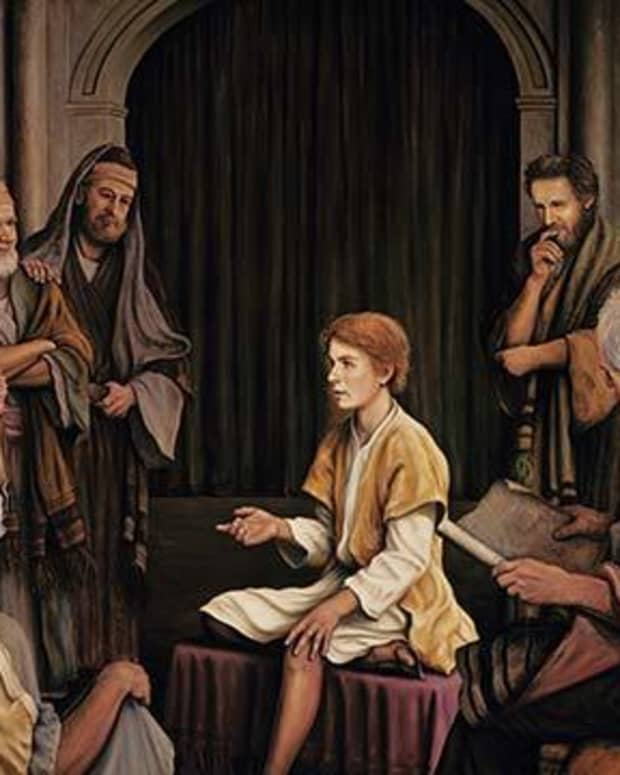
I work in the temple, it’s been so busy with Passover, I was looking forward to a bit of rest – but then I met The Boy. Ordinary looking, but so very not ordinary.

He wanted to talk about God! Why not? That’s the best thing a boy could want, so I took him to where the men were debating. I don’t know what I expected but my goodness….his answers, his questions! The sophistication of his thoughts and understanding of God. So raw, so pure.

I think he would have talked all night but I needed to get home, and I hadn’t seen him stop to eat. I invited him home to eat with my wife and I, and then with seemingly no where to go he stayed overnight.

The next day we returned to the temple and started again. For nearly five days this continued. Of course, we asked him about his parents and he spoke of them with such love, but no indication of where they were. We were getting used to him, both in the temple and at home.

I couldn’t help but wonder if we might have gained a lodger, we’d have been more than happy for him to stay. But then on the fifth day a man dashed in, wild-eyed, a mixture of relief and rage:

“Jesus, where have you been?? How could you do this??”
“you should have known I’d be in my father’s house” the boy replied.

I saw the mother in the partitioned area, wringing her hands. I led the boy and his father over to her and the three embraced, although the boy still didn’t seem to understand he’d scared them half to death.

I invited them all back home, to begin their journey anew in the morning. As I passed by the room where the couple were sleeping I couldn’t help – God forgive me – but over hear what the mother said:

“We’ve become complacent Joseph, since our return from Egypt, we’ve got so used to him being a normal boy, it’s made us forget he’s anything but ordinary. We must hold him lightly, my love, he’s never truly been ours after all”.

I often wonder what she meant? And I wonder if I’ll ever hear from the boy again. I feel like there’s greatness in his future.

The exercise ends with the following prayer:
Lord Jesus, from the start
You invite ordinary people to come to where you live.
When they come, you welcome them
and call them to labour and rejoice with you.
You are the most beautiful among all men,
and I hardly believe you want me for your friend.
You are powerful, Lord.
Draw me more and more into your friendship
and lead me along the way you took with friends.
—Joseph Tetlow

Justice and Joy

Preached on the 15th December and forgot to post...

We’re 3 weeks into Advent already – can you believe it? Without a word of exaggeration about 20 people have asked me this week if I’m ready for Christmas, and I’ve given the same answer every time – I’ve never ready…and yet… Christmas comes anyway. It being the third Sunday of Advent means it’s Gaudete (Gow-d’-tay) Sunday- the Latin for Rejoice.

This theme runs through our readings: Zephaniah’s Song of Joy declares:
Sing aloud, O daughter Zion;
   shout, O Israel!
Rejoice and exult with all your heart,
   O daughter Jerusalem!

In his letter to the Philippians, St Paul tells us:
Rejoice in the Lord always; again I will say, Rejoice. Let your gentleness be known to everyone. The Lord is near. Do not worry about anything - Which is pretty much my mantra during Advent.

So far so good, we’re feeling those rejoicing vibes…and then… we get to John in our gospel reading from Luke – what an absolute downer! How can this man have been the baby who leapt for joy inside pregnant Elizabeth when she encountered Mary, pregnant with Jesus? He’s grown into a proper misery-guts.
How can John’s words give us cause to rejoice?

What I’ve read this week is that it’s all about perspective, that what concerns John are the things which will make God rejoice, this flips it on its head and gives us a different way of thinking about John’s words…

…and John doesn’t mince his words, a prophet is a speaker of truth, particularly speaking truth to power, and pointing out hypocrisy and injustice, and when you examine it, it’s justice which is at the heart of the advice John gives to those who come to him, asking what they must do. Justice and joy are at the heart of God’s kingdom.

At the start of this 3rd chapter of Luke’s gospel we hear of Emperor Tiberius, Pontius Pilate, Herod, his brother Philip, Lysanias of Abilene, and the high-priests Annas and Caiaphas. Immediately after this we’re told; the word of God came to John son of Zechariah in the wilderness.

God didn’t send his word to the Emperor, the Governor, the kings or high-priests; he sent it to rest upon an eccentric in the desert. Where humankind thinks power and wisdom reside are very different to where God actually places them, so it may also be worth looking a little differently at what we think John is saying to those around him.

It strikes me what a diverse group of people have been drawn to John. Ada Wong Nagata writes: The crowd seems to represent the Jews who have enough; the tax collectors, the outcasts; and the soldiers, the gentiles. They all seek to change their lives. Even though John is harsh in the beginning, he gives advice to them all. John’s advice is not dramatic, he just asks them to turn from what they are doing their own way, and instead to start doing things the right way—God’s way.

Marcea Paul tells us: John doesn’t ask the people to change the world, but rather to change themselves. He doesn’t tell them to leave their lives and stay with him or start a revolution; he tells the crowds who came to him to consider sharing what they have with the cold and hungry. He told the tax collectors to be honest and fair. The soldiers, he cautioned to act with integrity, avoiding abuse of their power. “Go home,” John told them. Go home to your families, your neighbours, your vocations, your friends. Go home and live your lives as deeply and as generously as you can right now. Do what the Lord requires of you and do it now. Be generous now – Be merciful now – Do justice now.

For me this turns around the perceived harshness of John’s words, into something where if we were to go and live out that advice, I’m sure it would create something which would make God rejoice.

But what about the wheat and the chaff? How can that possibly be something worth rejoicing about? Well, I think that has something to do with what the wheat and chaff truly represent.

Have you ever met anyone who’s completely good? Even the best person you know? What about the worst person you’ve ever met? They can’t have gone through life without, even accidentally, doing something good. Surely no one is all bad or all good? How then will we be judged on who is wheat and who is chaff? I think the answer is, we’re all both.

We’re made of both wheat and chaff, good and bad, our hope is that living as people who love Jesus, who desire to follow his teaching, that when we’re baptised in his Spirit and flame, the Spirit fills our hearts, and the fire burns away our chaff.

Our chaff are the times we didn’t consider the outcast, the times we didn’t share the ways in which we’ve been blessed by plenty, the times we haven’t been honest and fair, when we acted without integrity or abused our power.

The longer we sit in the burning heat of Christ’s love, immerse ourselves in his ways, the more of the chaff gets burned away – it’s like the refiner’s fire of Zechariah 13:9:
And I will put this third into the fire,
    refine them as one refines silver,
    and test them as gold is tested.
They will call on my name,
    and I will answer them.
I will say, ‘They are my people’;
    and they will say, ‘The Lord is our God.’

I think God may indeed rejoice at seeing our closeness to Jesus, refining us in his fire, and becoming more fully the person God intends us to be.

I think, generally, we’re not very good at doing Advent, the penitential, prayerful preparation that it’s intended to be, but we’re here, trying our best to be close to Jesus, letting ourselves be slowly refined, bit by bit, year upon year. And I think that refinement leads us to change not the world but ourselves, as John advises his listeners, and if enough of us make those changes it does, in time, change us, our families, our communities and then, eventually, can change the world.

To go back to that question I, and probably you, am being asked constantly right now, are you ready for Christmas - how can we ever be ready for Christmas? For Godself to come and live amongst us with his spirit and flame? Where would we even begin to prepare?

So, as John was sent to prepare to way for Jesus, I guess the best thing we can do is follow his advice, and change ourselves, to focus on God’s rejoicing, and on seeking God’s justice and joy right here, today.
It’s comforting. In a world where we can change so little, where our anguish and anxiety are rising over wars, climate crisis and those gaining political power, our comfort comes in seeking what God seeks; justice and joy.

So Gaudete! Rejoice! Rejoice in the Lord always; again I will say, Rejoice. Let your gentleness be known to everyone. The Lord is near. Do not worry about anything.
Amen

Sunday, 10 November 2024

Why we still need to remember

At a glance, there doesn’t seem to be much of a link between today’s readings and today being Remembrance Sunday, although you may have found like me that a lot of things this week haven’t made much sense. In the words of Rosalind Brown “today's readings make no special concessions to Remembrance Sunday, which is appropriate, because war makes no special concessions to our lives”.

This year’s Armistice remembrance comes at a time when the world, and the concept of Peace, seems very fragile with the ongoing war in Ukraine, Escalation of hostilities in the Middle East, the Sudanese Civil War, Myanmar Civil War, and dozens of other conflicts the world over.

This is the most fragile peace has felt to me in my lifetime and this has been exacerbated by the election of a notoriously unpredictable US president. So, we might find ourselves asking - where do we find our hope?

This morning’s readings help me to remember two things which you may find helpful when searching for hope; firstly, like Jonah, James, John, Simon-Peter and Andrew we too are called. Everyone is. Some respond and some don’t. Like Jonah some may run away from where their call leads them, until a point where God becomes so insistent you have no choice – like being swallowed by a giant fish and spat out where God told you to be in the first place. Although our experiences are perhaps a bit less literal.

Or maybe, like these 4 apostles, we jump in with both feet, giving everything to Jesus, but finding we’ve make mistakes and had our doubts on the way. Whichever we’ve been, I’m sure there’s aspects of your lives – your career, the things you’ve given you time to, the people you’ve found yourselves amongst, that felt right, that felt it was the place God wanted you to be. When something feels right, I think it’s often a sign that we are where God wants us to be.

The second thing these readings lead me to remember is that Jesus’ work is already done. We continue it and strive to bring his message of love and equality to every corner of our lives, but He’s done the heavy lifting already. Memory and remembering is a peculiar thing, it’s so easy to forget God’s in control and at times give ourselves over to despair.

I don’t know if any of you have seen the film Coco? Years ago, we watched it at The LOFT as a way of engaging with this remembrance season. The film looks at memory, remembering loved ones who’ve died and our common memories. We’ve already had the feasts of All Souls and All Saints and today is the solemn day set aside to remember all those whose lives have been lost in conflicts the world over.

Coco is the story of a Mexican boy named Miguel, who accidentally ends up in the Land of the Dead on The Day of the Dead and must get help from his ancestors to find his way home.

We see the people of Miguel’s village both in their homes and at grave sides making offerings and remembering their dead ancestors. There’s an air of celebration to their remembrances.

It might surprise you to hear that visiting the graves of loved ones to honour them, lighting candles and decorating them with seasonal flora was also a practice in the British Isles on All Soul’s Day.

Film critic Clarisse Loughrey writes that our relationship to the dead is a key theme of Coco. Those who reside within the colourful, bountiful Land of the Dead can do so only as long as there is someone to remember them in the Land of the Living; once that last memory is lost to time, that individual – quite literally – fades into nothingness.

It's incredibly important that we find ways of engaging with younger generations about remembrance, that we keep alive the memories of our ancestors but also keep remembering the reasons for the world wars of the 20th century, and don’t let them fade into nothingness. When I was young the reasons for and outcomes of two devastating world wars were burned into our communal memories and conscious. Alongside “we will remember them” we said “never again”.

And yet we find our world in this fragile place, alongside the increase in and nearness of conflicts, we’re seeing a worldwide rise in those with extreme views gaining power and discrimination of certain minority, ethnic and religious groups. Our communal memories should be reminding us that we’ve been here before, and it wasn’t good.

Remembrance is central to the ritual of church life. Each time we gather here it’s an act of remembrance for the life of the one we’re called to follow. Every communion service has Jesus’ words “do this in remembrance of me”.

Our gathering here is a reminder that like the fishermen in today’s gospel we’re called to something else, for someone else. We recognise and remember the importance of God in our lives each day.

Remembering Jesus doesn’t mean we just think about him and hear stories from his life, it means we have a call to act and be different. Our remembering directly affects our actions in the world. Maybe remembrance is always about more than remembering, maybe true remembrance is about how we’re influenced to act and be because of those memories, because of the experiences of those who’ve gone before us and because we should learn, grow and change through our shared memories.

It may sound obvious, but I think it’s important to remember that today is a memorial of peace, and that we as Christians are the agents of God’s peace.
We can’t let these memories fade into nothingness because by keeping them alive we highlight the importance of peace, and hopefully have a better chance of achieving it.

To finish I’d like to share a prayer of remembering:

In the love that created a universe we remember
In the love that created those who have died through war we remember
In the love that blessed their lives with love we remember
In the love that blessed their lives with laughter we remember
In the love that wept when they wept we remember
In the love that healed them by welcoming them home we remember
In the love that holds our broken hearts in its heart we remember. Amen.