Showing posts with label forgiveness. Show all posts

Thursday, 19 March 2020

Feast of St Joseph- stay connected

This is rather an odd day. I’ve led communion services where there’s only been 2 of us before, that’s usually the case when we hold a eucharist at the hospital chaplaincy; but I’ve never presided over a eucharist in a situation like this, of course very few of us could even imagine such a time and situation as this. 

There’s Paul and myself here now but I have no idea how many people will share in our communion today as we attempt our first St Michael’s service recording. As many of you will now be aware the church as a whole has taken the unprecedented step to suspend all public worship, so our challenge and call is to find alternative and creative ways of sharing our worship with you and continuing in our communal life even though that communal life is being lived out apart for now.

You might be wondering why, half-way through Lent, we're back at Christmas in our gospel reading today (Matthew 1:18-end), but today is in fact the feast day of St Joseph, so he is central in our gospel. And there’s two things I take from this reading in our current situation.

Firstly about Joseph himself. We really know so little of him. After Jesus' childhood he completely disappears and so most of the year, outside of the Christmas story, he's completely overlooked, and yet he is so important. I remember I mentioned this briefly in my midnight mass sermon; Jesus and Mary have Josephs name and therefore his protection. With Mary, Joseph creates a home and a family in which Jesus grows and is nurtured and in which they go on to welcome further children.

It’s reminding me of all those people who are important- central- to the crisis we find ourselves in right now. The overlooked, those labelled as unimportant until there importance is central to the well being of each and everyone of us; care staff, domestic staff, delivery drivers, supermarket workers, porters, lab staff and so many others whose worth to the functioning of society is only now becoming clear to so many of us.

Secondly the reading is a reminder of the most central truth of our existence; God is with us. Emmanuel. It may not feel like it, but through all of this mess God is and always is with us. For our highest of highs and lowest of lows we have a God who chooses to be alongside us and experience our hardships, pain, our grief and confusion. All of it.

And we're reminded of the angels words to Joseph, the words we need right now; “do not be afraid". I believe this is the most common phrase communicated to us from God within the scriptures. I don’t know if it’s true but I have read that it’s written 365 times- once for every day of the year.  Whether that’s true or not doesn’t detract from it being something God wishes to get through to us more than anything else. God is with us, do not be afraid.

That is of course much easier to say than do, and for many of us this is a time of disruption, fear and unknowing. We’re still in the Lent wilderness but none of us could have imagined this is the place we were being led to. 

As people of faith we’re called to be different, and whilst we must live within these new boundaries I implore each of us to use our fear of the unknown and channel it into making connections, of finding new ways of being church, new ways of serving and supporting our community. God is with us. Do not be afraid.

Intercessions
Let us pray for the Church and God’s world
and, inspired by the example of Joseph,
for grace to grow in faith and holiness
and to follow ever more closely in the way of Christ. Joseph was the husband of Mary, of whom Jesus was born, who is called the Messiah: may we value our family life at home and in the wider family of the Church. We pray for all the members of our community and the wider church who are actively seeking out new ways of being church in our daily changing world. We pray for churches coming together to support the most isolated and the most in need.
Lord, in your mercy, hear our prayer

Joseph was asked by the angel to not be afraid and to trust in God’s will: may we have no fear when we hear God’s call to his service. We pray for all those called to serve others. We pray in particular for NHS workers and those working in shops selling vital provisions. We think of those who cannot work right now and those who have lost their jobs.
Lord, in your mercy, hear our prayer

Joseph was a man of integrity, protecting Mary from the societal disgrace she may have experienced. May we lead lives of integrity and be concerned for others.
We pray for those leading communities and nations right now, that they be people of truth and integrity.
Lord, in your mercy, hear our prayer

Joseph protected Jesus and Mary from the wrath of Herod: may we always seek to shield those who are weak and vulnerable.
We pray for those who are ill, those who are suffering with mental health conditions, those who are frightened, the most at risk groups and those who are isolated and lonely. We offer our prayers for those on our church healing list.
Lord, in your mercy, hear our prayer

Joseph took his family and returned to his native land: we remember those who have died recently and those anniversaries fall this week. May we, with them and all the departed, be welcomed to the banquet of eternal life.
Lord, in your mercy, hear our prayer

Almighty God,
we give you thanks for Joseph
and for the whole company of your saints in glory, with whom in fellowship we join our prayers and praises; by your grace may we, like them, be made perfect in your love; through Jesus Christ our Lord.
Amen.

Sunday, 8 March 2020

2nd Sunday in Lent 2020

We’re well into Lent now aren’t we? Are any of you doing anything special for Lent this year? Given anything up and taken something up? I find I’m really enthusiastic at the start, I absolutely love Lent, which I realise is a bit weird, but it can get to the point where it starts to feel really hard depending upon what it is I’ve taken on or given up.

I doubt any of us have gone to quite the extreme, whether due to Lent or because we’re Christians, of giving up all or possessions like Jesus says in our Gospel reading this evening.

Now it’s really hard to say exactly what Jesus means here, some have taken it literally, like the Franciscans and other religious orders who take a vow of poverty, some have said he’s talking specifically to this particular group of people and others have pointed out that Jesus often uses extravagant and exaggerated language to emphasise a point. Whichever of those you believe Jesus is telling us it’s not an easy path to follow him, there may be a cost to us and we need to weigh that up.

Lent gives us the opportunity to explore this in a safe way. We’re invited to follow Jesus into the wilderness and spend time with him. To understand and deepen our commitment to this Lent journey we may choose to deny ourselves something or take up a discipline that asks something of us.

But we know Easter is coming, we know we get to celebrate at the end of the 40 days and nights. What if we didn’t know how the story ended? Would Jesus’ teachings be enough? What are we prepared to sacrifice, what are we willing to go through or even give up for our belief in those teachings? My answer is I don’t know, I don’t know how far I would go, but each Lent I try and take time to explore these questions, to ask myself can I carry the cross? What is the cost of my faith? What is Jesus asking of me, today, here and now.

I believe that the sacrifice we’re asked to make, the cost to us, is love. That doesn’t sound difficult on the surface, not like a sacrifice at all, but the love that’s asked of us is deep and unconditional, and I struggle with it every day. 

We’re asked to love those who don’t love us, those whose opinions and actions we find hateful, those completely unlike us in every way. Because we’re not just asked to love people we know, or good people, we’re called to love those who’ve committed crimes, those who’re racist, those who hurt women or children. And to us that probably seems impossible. It’s so much easier to not love, or feel justified in not loving someone because of the awful things they’ve done.

But if we believe Jesus’ teachings then we believe that God loves each and every one of us equally, God loves me as much as someone who’s committed a hate crime or murder. A difficult and inconvenient truth. Every person made in God’s image has the capacity to reflect God’s love. Our challenge through Lent is to ask ourselves what are our barriers to unconditional love? What are our prejudices and who do we feel we can’t love? And can we lay these aside to more closely follow Jesus? If we can leave some of them in the wilderness at the end of Lent maybe we’re a little bit closer to reflecting God’s love in the world.

Luke 14.27-33 (Evening Prayer New Testament reading for today)
Whoever does not carry the cross and follow me cannot be my disciple. For which of you, intending to build a tower, does not first sit down and estimate the cost, to see whether he has enough to complete it? Otherwise, when he has laid a foundation and is not able to finish, all who see it will begin to ridicule him, saying, “This fellow began to build and was not able to finish.” Or what king, going out to wage war against another king, will not sit down first and consider whether he is able with ten thousand to oppose the one who comes against him with twenty thousand? If he cannot, then, while the other is still far away, he sends a delegation and asks for the terms of peace. So therefore, none of you can become my disciple if you do not give up all your possessions.

Sunday, 1 March 2020

1st Sunday in Lent 2020

So we find ourselves once more at the beginning of Lent. I’m going to be completely honest- I love Lent. It’s probably my favourite part of the liturgical year. Maybe because I like routine and orderliness. I love structure and Lent gives us structure – a structured way to enter into the wilderness (like Jesus in the gospel reading), which is anything but orderly; yet Lent gives us a way of entering the wilderness with Jesus and a way to confront what we find there.

We start on Ash Wednesday with a service that moves us to ask ourselves “who am I?” by exploring our choices, the things we’ve done and thought and said, and examining which of those choices didn’t come from a place of Godly love. We also confront our inevitable death, and if we’re going to die how then do we want to live? Who are we and what are the things which have the capacity to draw us away from God?

We have readings this morning all about temptation, and a reminder of the things which do have the capacity to draw our eye from God and move us out of or away from our relationship with God.

There’s been a shift in our language in that we often talk about sins, plural; individual activities or acts which are bad or wrong and by these actions we ourselves become sinful or have committed a sin. Jesus (and Paul) most usually talks about sin, singular, no s on the end, which Sarah Heaner Lancaster defines as anything which takes us out of relationship with God.

This much broader understanding I feel is perhaps a more helpful thing to take into the wilderness with us during Lent. 

I said on Wednesday in that solemn Ash Wednesday service of remembering that one of the things we remember and apologise for are the times we forgot we aren’t alone, because they're the times, when we forget that God is with us - the very meaning of the word Emmanuel – that’s when we fall out of relationship with God, and make the choices that don’t mirror God’s love that is very much within us.

So maybe a question to ask ourselves at the beginning of our wilderness journey this Lent is what are our temptations? And by that I mean the things which run the risk of taking us out of our relationship with God. Lent gives us a safe space to give space and time for these questions and explorations, knowing that like Jesus it’s the Spirit who leads us and sustains us in the wilderness. As we work towards Easter Day we can use Lent as a safe space to explore who we are and how we want to live our lives, hopefully in a way which mirrors Gods love to those around us.

Based upon Genesis 2.15-17; 3.1-7Romans 5.12-19 & Matthew 4.1-11

Wednesday, 26 February 2020

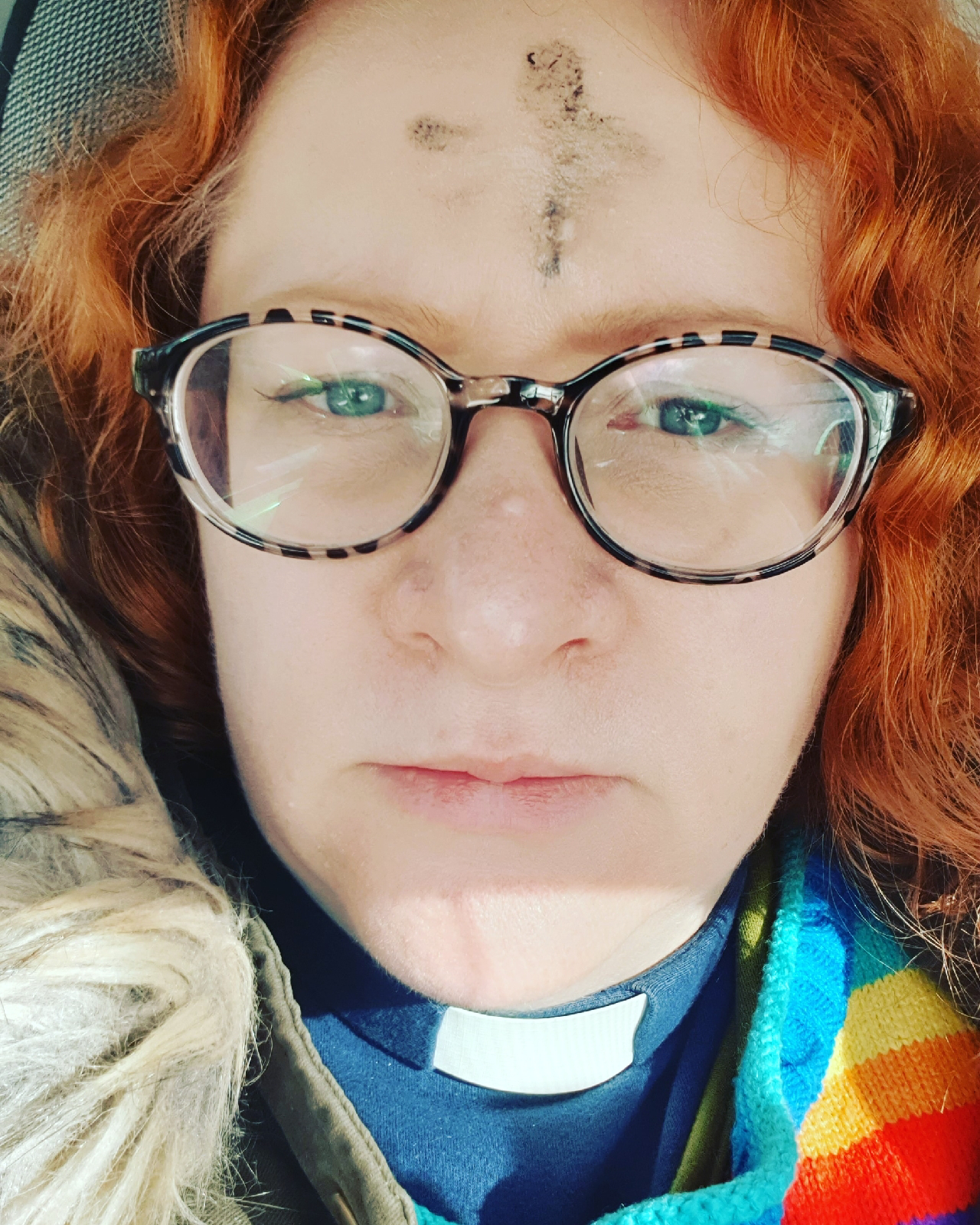
Ash Wednesday 2020

I wrote this for this morning's school service where 90 children came to St Michael's to share in a pared down Ash Wednesday service with ashing. 

I decided to read it again at our main service this evening; we're told to come with the faith of a child and sometimes we need to hear something very simply put.

Ash Wednesday isn’t about thinking of the things we’ve done wrong so we can be reminded that we’re bad people; it’s remembering that God created us from goodness for goodness.

And we get to ask the question why; why, when we’re created good do we sometimes not act kindly, or why do we create space in the world for unkindness to happen?

Today isn’t about thinking that one day we’ll die so that we can be sad; Knowing we will die should help us to see how we should live now.

But we don’t remember our choices and our deaths on our own; we use this day to remember together, as a community, because we don’t live our lives alone, we live our lives together.

And today we apologise together for all those times we chose something that wasn’t loving, that wasn’t kind, and for when we forgot that we aren’t alone; when we forgot that not only do we belong to each other but to God.

Today we recognise together our good and bad choices. We recognise that like God’s wonderful creations the plants and trees we’re capable of amazing beauty if we choose to live lives based in love. Like holy soil nurturing the things which grow in it, we grow in love.

Lent begins today. 40 days and 40 nights to take us up until Easter. 40 days and 40 nights where we think about the best way to live in the world, the best way to use our wonderful gift of a life. 

Let’s just take a moment, a tiny snapshot of time, to stop, to remember and to think of our amazing capacity to love  and to live kind, beautiful, flourishing lives, lives which mirror the love God has for us.


Sunday, 17 September 2017

The F Word


Sermon based upon Matthew 18:21-35

I feel like poor Peter has come in for a bashing recently on Sunday mornings! So many of the gospel stories we’ve heard have centred on his ability to get things wrong, and that’s the case again today.

Peter thinks he’s being super generous, abundantly merciful, with his suggestion of offering forgiveness 7 times. The thing is, in the Jewish tradition and wisdom teaching God forgave 3 times and punished at the 4th offence, which I think comes from Amos where God forgives Israel’s enemies 3 times. Because humans could never be more gracious than God they could only forgive 3 times and no more, so Peter with his suggestion of 7 times, more than double what his culture taught, must have thought Jesus was going to be blown away by his answer.

Cue another instance of Jesus giving Peter a friendly pat on the shoulder as he shows that yet again his assumptions are very wrong, and states a figure of 77 times. This isn’t a literal 77, Jesus is using hyperbole and a playing on the words used in a verse from Genesis, referred to as the law of vengeance: If Cain is avenged sevenfold, truly Lamech seventy-sevenfold (Gen 4:24). Instead of extreme vengeance Jesus is calling us to extreme mercy and forgiveness.

To illustrate his point Jesus tells the parable of the unforgiving servant. The sum of money he owes, 10,000 talents is deliberately extravagant. It’d be millions today, this illustrates the extreme generosity, mercy and forgiveness he’s shown. The amount owed the servant, in which he shows no mercy, is just a few quid in comparison.
Jesus is illustrating that as God shows us radical forgiveness, we must respond to that by showing radical forgiveness to others.

I’ve been wondering this week what was it about the servant, after being shown such mercy and compassion, that failed to stir up the same mercy and compassion within him? What was is about his culture and background, his life experiences, that meant despite the extreme nature of the forgiveness he received, he was unable to show that, on a much smaller scale, to another?

I’ve probably mentioned it before but I’m a huge admirer of Desmond Tutu. His theology, his wisdom, the life he’s led, I admire him a great deal. A few weeks ago, I read some extracts from an article he’d written about forgiveness at our Thursday morning service, so apologies to anyone who was there when I repeat myself today.

His work regarding radical forgiveness, especially heading the Truth and Reconciliation Commission in post-apartheid South Africa is well known. During that process victims of human rights violations shared their stories, and perpetrators of those acts were granted amnesty. What might not be as well-known are the personal struggles he faced, particularly growing up with an alcoholic and abusive father.

He recounts witnessing his father abusing his mother and says this: When I recall this story, I realise how difficult the process of forgiving truly is. Intellectually, I know my father caused pain because he himself was in pain. Spiritually, I know my faith tells me my father deserves to be forgiven as God forgives us all. But it is still difficult. The traumas we have witnessed or experienced live on in our memories. Even years later they can cause us fresh pain each time we recall them.

Intellectually and from a position of people who belong to Christ we know forgiveness, radical and unconditional, is what we’re called to, but when the hurts run so deep our emotions blind us to what our logic or intellect might be telling us. The article continues:

I know [forgiveness] is the only way to heal the pain in my boyhood heart. Forgiveness is not dependent on the actions of others. Yes, it is certainly easier to offer forgiveness when the perpetrator expresses remorse and offers some sort of reparation or restitution. Then, you can feel as if you have been paid back in some way. You can say: "I am willing to forgive you for stealing my pen, and after you give me my pen back, I shall forgive you." This is the most familiar pattern of forgiveness. We don't forgive to help the other person. We don't forgive for others. We forgive for ourselves. Forgiveness, in other words, is the best form of self-interest.

Forgiveness takes practice, honesty, open-mindedness and a willingness (even if it is a weary willingness) to try. It isn't easy. Perhaps you have already tried to forgive someone and just couldn't do it. Perhaps you have forgiven and the person did not show remorse or change his or her behaviour or own up to his or her offences – and you find yourself unforgiving all over again.

It is perfectly normal to want to hurt back when you have been hurt. But hurting back rarely satisfies. We think it will, but it doesn't. If I slap you after you slap me, it does not lessen the sting I feel on my own face, nor does it diminish my sadness over the fact that you have struck me. Retaliation gives, at best, only momentary respite from our pain. The only way to experience healing and peace is to forgive. Until we can forgive, we remain locked in our pain and locked out of the possibility of experiencing healing and freedom, locked out of the possibility of being at peace.

This belief, of forgiveness bringing us Peace and Healing, was central to the Truth and Reconciliation commission. The acts requiring forgiveness would be to us inhuman, barbaric, and yet forgiveness, radical and Christ-like was offered.

These principals have been carried over into a UK based project backed by Desmond Tutu called the Forgiveness Project. It’s a charity that uses the stories of both victims and perpetrators of crime and violence to explore how ideas around forgiveness, reconciliation and conflict resolution can be used to impact positively on people’s lives. It’s non-partisan and non-religious but many Christian organisations have been involved as it so closely reflects Christ’s teaching.

It’s an encouragement to debate, not holding up forgiveness as an all-healing magic bullet, but rather an examination of forgiveness as a means to finding resolution, and hopefully, eventually, transformation. I really recommend exploring the project, reading some of the stories, because it’s a glimpse of the possible, and I believe a glimpse of Kingdom living.

I’ve used a lot of Desmond Tutu’s words today, and I’m going to use some more, because his lived experiences mean he puts this better that I ever could:
A human life is a great mixture of goodness, beauty, cruelty, heartbreak, indifference, love and so much more. All of us share the core qualities of our human nature and so sometimes we are generous and sometimes selfish. Sometimes we are thoughtful and other times thoughtless; sometimes we are kind and sometimes cruel. This is not a belief. This is a fact.

No one is born a liar or a rapist or a terrorist. No one is born full of hatred. No one is born full of violence. No one is born in any less glory or goodness than you or me. But on any given day, in any given situation, in any painful life experience, this glory and goodness can be forgotten, obscured or lost. We can easily be hurt and broken, and it is good to remember that we can just as easily be the ones who have done the hurting and the breaking.

The simple truth is, we all make mistakes, and we all need forgiveness. There is no magic wand we can wave to go back in time and change what has happened or undo the harm that has been done, but we can do everything in our power to set right what has been made wrong. We can endeavour to make sure the harm never happens again.
There are times when all of us have been thoughtless, selfish or cruel. But no act is unforgivable; no person is beyond redemption. Yet, it is not easy to admit one's wrongdoing and ask for forgiveness. "I am sorry" are perhaps the three hardest words to say.

We can come up with all manner of justifications to excuse what we have done. When we are willing to let down our defences and look honestly at our actions, we find there is a great freedom in asking for forgiveness and great strength in admitting the wrong. It is how we free ourselves from our past errors. It is how we are able to move forward into our future, unfettered by the mistakes we have made.

The parable of the ungrateful servant is both a parable of seeking forgiveness and of forgiving. It shows us how much can be forgiven when we know we’re wrong and we ask for forgiveness, and it also shows us how much hurt can come when we don’t give forgiveness when people ask it of us.


I don’t know what it was within the servant that meant he couldn’t find a way into forgiveness, but that inability led to the continuing suffering of both himself and the man asking for forgiveness. God requires us to be as generous in our forgiveness as he is with us, which we know is infinite. It’s a big ask, and it’s not easy at all, but it does contain the power to transform lives. 

Wednesday, 18 February 2015

Say Sorry

I was listening to something the other day - can't remember what as my memory is soup these days - but it pointed out that often when someone makes a public apology it's along the lines of "I'm sorry if my actions offended you/upset you/hurt you." It's not very often we hear someone admit they made a mistake or did something wrong, they're upset at the consequences of their action but not the action itself.
Christians are called to continually examine and assess their actions to decide if they could have acted in a way that was hurtful or harmful, and if so to make amends, not repeat the behaviour, and to say sorry; to admit we did something wrong.
The amazing thing about God is that, no matter how many times we mess up and have to say we're sorry, he'll still forgive us. Every time; so long as we are truly sorry, even if it's something we messed up before and swore we wouldn't do again. We never run out of second chances, even if we can't forgive each other or ourselves.

I think the word "repent" carries a lot of baggage, but what it means is to turn around, do a 180 degree turn to turn our backs on what we've done that's harmful and turn towards what isn't.
When I asked my kids if there was anything they were sorry they'd done the replies I got were taking other people's chocolate - an ongoing saga in our house - and shouting at each other. In return for their honesty I told them I was sorry for when I was snappy with them or didn't listen properly. I really am sorry and I don't want to ever do it again- but being honest I know I probably will...and I'm pretty sure the chocolate thief will return!! Being a Christian doesn't stop me doing things wrong, but it does help me to reflect upon my actions and try and sort stuff out when I do mess up.

Matthew 3:2
‘Repent, for the kingdom of heaven has come near.’

Tuesday, 1 April 2014

Care for your friends more

There is much more to a good friendship than remembering birthdays...I hope...because if that's how these things are measured I'm pretty appalling. Well, it's not necessarily remembering that's the issue, it's doing something about it. I'm rubbish- especially where using the postal service is concerned. The procurement of stamps and visiting post boxes seem beyond me- so praise be for Moonpig, Getting Personal and other such companies who help me with this terrible affliction.
Despite my best efforts I had misplaced a couple of birthdays along the way so I took the opportunity to correct this today, sending a card for a missed birthday last week (sorry Al!) and finally remembering to give another friend a pressie from her February birthday (sorry Lorna!)
I'm doubt I'll ever get much better at this, but I do love you all despite my forgetfulness/lack of organisation.  Forgive me..?

Wednesday, 5 March 2014

Say Sorry

Today, Ash Wednesday, marks the beginning of Lent and I would usually this morning have attended the traditional service with ashing at St Michael's. Having been in work all day this wasn't possible. This, coupled with an incredibly busy day, has made me feel that I'm not really starting Lent in a way that feels right or familiar- but this can be a good thing.
There was a discussion (on Facebook) earlier today about how familiar and therefore devalued the word "sorry" has become. Familiarity can be a comfort but it can also mean you take sometning for granted.
Today's LLLL action is to think of something you've done wrong and say sorry for it. We forget what a powerful thing it can be to be truly sorry- and to know we are absolutely forgiven.
The kids went to bed thinking about what they were sorry for. Children think saying sorry is some sort of magic that makes everything better, but as we get older we know that what we, and others, say with our lips we don't always feel in our hearts. This goes especially for forgiveness. Whilst we say we've forgiven someone the pain of how we were wronged can still linger.
How amazing then that no matter what each of us has asked God to forgive in us today we know he will grant that forgiveness. I think I need to be sorry for not being as forgiving as I should be.

Matthew 3.2: Repent, for the kingdom of heaven has come near.